

Commentary
Mohanad Hage Ali
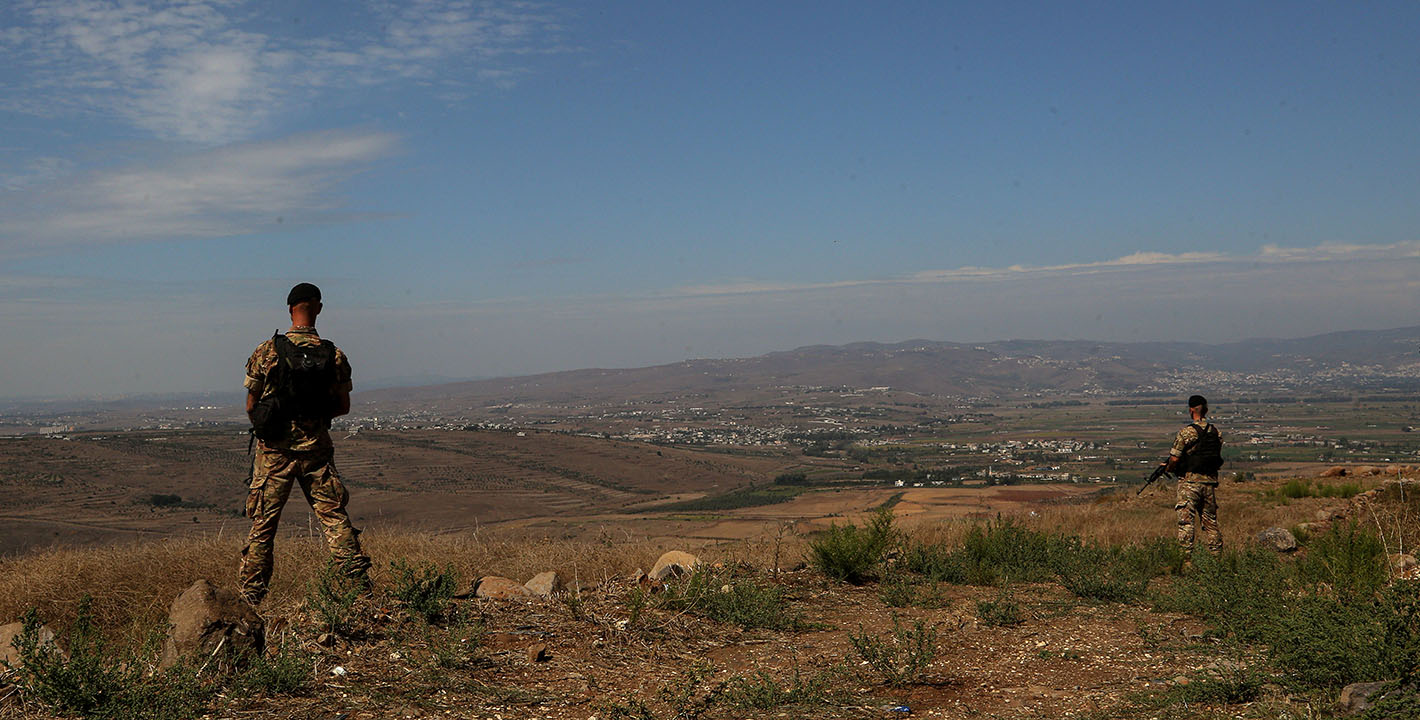
Source: Getty
The Lebanese authorities’ clampdown on illicit cross-border activity threatens to leave inhabitants of the historically neglected village, and the wider Akkar region, in an economically precarious position.
Summaqiyyeh, a village in north Lebanon of roughly 2,100 people that is split almost evenly between Alawite and Sunni residents, is in several ways emblematic of the border settlements of the Akkar region. Illicit cross-border trade has served, in Summaqiyyeh and other mixed Alawite-Sunni villages, as a guarantor of social harmony. It has done this by creating an economic interdependency between Alawites and Sunnis, generating a shared interest in communal amity, and encouraging a practical ethic of mutual civic obligation, all in a marginalized village and region. Yet an influx of Syrian Alawites fleeing sectarian violence by government-affiliated groups in their country in the spring of 2025, the near-absence of the Lebanese state in Akkar, and external pressure on Syria and Lebanon to crack down on cross-border smuggling are together placing great strain on the region’s relative calm. The Lebanese government, having had to deal with a particularly destructive Israeli military onslaught in the spring of 2026, lacks the means to address the north’s problems, and may have to seek funding and other support from abroad.
The region’s relationship with the Lebanese state has historically been one of marginalization; Akkar is one of the poorest and most neglected of Lebanon’s governorates.
The Alawite presence in Akkar is not recent. Lebanese Alawites, who form a sizeable minority of the population of the Akkar plains, have lived alongside Sunni communities in a number of border villages for generations. In Summaqiyyeh, rough estimates put Alawites at around 55 percent and Sunnis at 45 percent. The region’s relationship with the Lebanese state has historically been one of marginalization; Akkar is one of the poorest and most neglected of Lebanon’s governorates. This legacy is part of Summaqiyyeh’s contemporary identity, in that there is a consensus among the locals that they and their needs are ignored.
An example of the marginalization at play was the government’s promise to turn a natural spring that was discovered in 1969 into a health spa project. Today, decades later, the spring still flows into a muddy, littered patch of land, thus serving as a monument to official abandonment. Similarly, local officials complain that the government has done nothing to combat increasingly severe flooding in a region where agriculture is a major source of livelihood; overflows from al-Nahr al-Kabir (the Big River), destroyed crops and property in 2016, 2019, 2023, 2024, and 2026. In an interview, Summaqiyyeh’s former mayor, Bilal Shamaa, lamented the fact that, over a period of years, his repeated calls on Beirut to help the village in its efforts to stem the flooding fell on deaf ears.1
Notably, in spite of Summaqiyyeh’s marginalization at the hands of the state, a disproportionate number of its men serve in the Lebanese armed forces and the country’s security services. Shamaa estimated that close to 200 residents, nearly a third of the village’s population of working-age males, are employed in the military or the security apparatus.2 This creates a bond-of-sorts between Summaqiyyeh and the state as well as a shared institutional affiliation among Sunnis and Alawites.
However, public-sector salaries collapsed following Lebanon’s financial crisis of 2019. A soldier’s monthly pay dropped from around $700 to barely $100 as the Lebanese pound lost over 98 percent of its value. (Even with increases in the years since, the salary for a Lebanese soldier still stands at only $250–$400 per month.) The crisis hollowed out one of the main buffers against poverty in Summaqiyyeh and other border villages. Amid this alarming reality, cross-border smuggling, which was always present and also historically tolerated by both Lebanese and Syrian authorities—with tobacco, fuel, consumer goods, pharmaceuticals, and agricultural produce flowing in both directions—grew in importance.
Smuggling spiked further due to conflict. During its 2024 war against Hezbollah, Israel launched air strikes on Lebanon’s official border crossings in Dabbousieh and Arida, claiming that they were used to transfer Iranian arms to Hezbollah. This destruction of official transit infrastructure pushed much cross-border trade into informal channels, increasing the volume and variety of smuggling. Then, in the general chaos following the collapse of Bashar al-Assad’s regime in December 2024, members of several units of the Syrian army began to look for buyers for certain of their weapons. They found them among gunrunners in Lebanon, to whom the arms had to be conveyed via illegal means.
Yet this development marked the beginning of the end of the heightened smuggling ushered in by the 2019 financial crisis and intensified by the inoperability of the Dabbousiyyeh and Arida border crossings. To begin with, the influx of weapons into Lebanon aroused the ire of the United States. Additionally, a new phenomenon—separate from the arms-smuggling yet very much related to the coming to power of a new regime in Syria—was about to affect northern Lebanon and its mixed Alawite-Sunni villages.
On March 6, 2025, violence tore through the Alawite coastal towns of Syria’s Lataqia Governorate. What began as an ambush of security forces by former fighters of the Assad regime quickly spiraled into wider violence, as the new authorities launched sweeping reprisals across Alawite villages. Hundreds of civilians were killed and an estimated 60,000 Syrian Alawite refugees subsequently traversed the border—some through official crossings, others where security was lax or nonexistent—with most streaming into roughly a dozen northern villages where Lebanese Alawites formed a majority. This placed considerable strain on an underdeveloped region and also stressed sectarian relations. Moreover, together with the flow of illicit arms from Syria into Lebanon, it prompted external pressure on the Lebanese government to clamp down on the border.
From the start, the new demographic reality in Akkar’s border areas had the potential to cause unrest. The refugees came with accounts of state-orchestrated anti-Alawite violence in their native Syria. They sought sanctuary in Lebanese villages, including Summaqiyyeh, where many Sunnis were not only sympathetic toward the new regime in Damascus, but also wary of those who had supported its brutal predecessor. Communal tensions grew, as did fears of an outbreak of violence. The city of Tripoli, an hour’s drive south, has a long record of clashes between the Alawite neighborhood of Jabal Mohsen and the Sunni one of Bab al-Tebbaneh. Many Summaqiyyeh residents, both Alawite and Sunni, work in these same Tripoli neighborhoods.3
To make matters worse, social media amplified rumors and accusations of Assad loyalist networks operating in Lebanese villages. In Talbireh, a village neighboring Summaqiyyeh, social media accounts alleged in February 2025 that Alawite residents had kidnapped Syrian Sunni refugees who had remained in Lebanon following the fall of the Assad regime. Angry Sunni locals responded by blocking roads and calling for action against Syrian Alawites. The accusation turned out to be false: the Syrian nationals in question had not been abducted, but were rather arrested by the Lebanese authorities. Still, the incident illustrated how charged the atmosphere had become.
Smuggling in Lebanon is by nature a cooperative enterprise, as opposed to a solo undertaking.
In Summaqiyyeh, officials and family elders from both communities were largely successful in pushing back against rumors, fear, and political provocation. There were two reasons for this. The first was that smuggling in Lebanon is by nature a cooperative enterprise, as opposed to a solo undertaking; moving goods across a porous but policed frontier requires networks and trusted counterparts on the other side, intermediaries who can navigate checkpoints, and community leaders who can manage the fallout should anything go awry. In Summaqiyyeh, these networks have historically organized themselves across Alawite and Sunni communities, as opposed to exclusively within each, thereby strengthening relations between the two. In a border region where resources are scarce, cross-communal cooperation shapes the general mood and helps defuse sectarian tensions that might otherwise be inflamed by political events.
The second factor was that during the long years of Syria’s tutelage over Lebanon, and especially the period of outright occupation (1990–2005), Summaqiyyeh Alawites accumulated significant moral credit among their Sunni neighbors. Owing to their familial and social connections with coreligionists who held disproportionate influence within the Syrian security apparatus, Alawites of Summaqiyyeh and other border villages successfully interceded on behalf of Lebanese Sunnis when the latter were arrested for non-political infractions. As one Sunni local official in a coastal area of Akkar said in an interview, referring to Lebanese Alawites, “We owe them, and we have not forgotten their help during the era of the former regime.”4
Tensions in Summaqiyyeh and most other Alawite-Sunni villages may not have morphed into violence, but Lebanon’s extreme north soon faced another challenge, one that would tip the region into crisis. Several external actors—principally, the United States, Saudi Arabia, and Syria—prevailed on the Lebanese government to clamp down on smuggling. The ramifications were immediate and significant. For all intents and purposes, Lebanon upended a system that had undergirded the local economy and, to a certain extent, even structured communal relations.
Without some kind of monetary or material relief, which could be provided by those countries pressing Lebanon to curb smuggling, the economic situation will deteriorate further.
Ironically, at a time when illicit cross-border trade had become more essential than ever for the economic survival of Lebanon’s north, owing to the collapse of army salaries, the deleterious effects on agriculture of repeated flooding, and an influx of destitute refugees with limited prospects in the Lebanese job market, it was subjected to curtailment. To make matters worse, the Lebanese government, which launched the crackdown in response to outside pressure, did little to ameliorate the conditions of the already neglected region. What has made the resulting crisis in Lebanon’s far north different from previous crises is not political and social tensions, but the erosion of the economic buffers that once absorbed them. Without some kind of monetary or material relief, which could be provided by those countries pressing Lebanon to curb smuggling, the economic situation will deteriorate further, sociopolitical friction will accelerate, and violence may erupt.
The United States began to ratchet up pressure on Lebanon to do something about smuggling in early 2025. The fall of the Assad regime in December 2024 had cut Hezbollah off from its land bridge to Iran, and Washington had prevailed upon President Joseph Aoun and his government to commit to disarming the group, whose capabilities and political influence had been downgraded. However, the United States was alarmed by the proliferation in northern Lebanon of weaponry entering from Syria, over which the new regime in Damascus had yet to exercise full control. The fear was that Hezbollah would find a way to reestablish its supply lines, and that the Lebanese state would not be able to carry out its commitment to disarm the group.
Around the same time, Saudi Arabia, which was concerned about the flow of illegal Captagon pills from Syria into its territory and had long supported Hezbollah’s disarmament, also pressed Lebanon and Syria to assert control over their common border. Riyadh established direct channels of coordination between the new Syrian regime and the Lebanese authorities for them to exchange information on smuggling and drug networks. This effort ran in parallel to plans for border demarcation negotiations—a contentious issue for Lebanon, which has long sought official Syrian recognition of its borders.
U.S.-Saudi pressure on Lebanon also followed months of tensions in the country’s northeastern border governorate of Hermel, which began with clashes between the new Syrian regime’s forces and Hezbollah-backed Lebanese Shiite clans. In February 2025, the Lebanese army intervened in Hermel to situate itself between the two sides, tamp down the escalation, and respond to Syrian fire. In Akkar, the Lebanese government took action in May 2025, ordering the seizure of smuggled goods, and continued to do so afterward. In November of that year, security services blocked illegal crossings in Summaqiyyeh and neighboring villages with makeshift barriers.
Additionally, the new Syrian regime itself took to demanding that the Lebanese government work with it to enact stringent border controls. This was directly related to the Alawite refugee issue, and was accompanied by calls that Beirut extradite former military officers who were said to have moved to Lebanon. In September 2025, CNN interviewed a former Syrian general in Beirut, and in December, Al Jazeera reported that loyalists of the toppled Syrian regime were trying to regroup in coastal areas of Syria and parts of Lebanon. The new authorities in Damascus began to fear cross-border attacks originating in areas of Alawite concentration in northern Lebanon. Beginning in January 2026, and at President Aoun’s instruction, the Lebanese security services conducted multiple raids on Alawite encampments in the north and the Biqaa Valley and arrested several Syrian Alawites for various security offenses, though without locating the 200 former military officers wanted by Damascus.
Despite the fact that the crackdown on smuggling has had an adverse effect on their livelihoods, it is notable that most locals in the Akkar still wish for the state to play a significant role in the border region.5 Their experience over the past few years has strengthened this conviction. Even before the clampdown, when cross-border smuggling was virtually unfettered and increasing in scope, it could not fully compensate for the sharp decline in soldiers’ salaries and the repeated agricultural failures—both of which locals claim the state can mitigate. Moreover, the influx of refugees from Syria has reinforced a feeling that there is no solution without ameliorative action by Beirut. Today, Summaqiyyeh’s mayor and local officials continue to call for state support in hosting the refugees, managing the flooding of the river, rebuilding border crossings and improving trade relations with Syria, and battling widespread crime in the form of protection rackets, property seizure, and turf wars between gangs.6
The problem is not simply that Beirut’s track record when it comes to looking after the needs of Akkar and its people is hardly encouraging; it is that the state is overstretched.
The problem is not simply that Beirut’s track record when it comes to looking after the needs of Akkar and its people is hardly encouraging; it is that the state is overstretched. The government has few resources and is spread thin by the relief efforts necessitated by the spring 2026 conflict between Israel and Hezbollah. Indeed, Israel’s displacement of 1.2 million people, its seizure of more and more territory, and its destruction of vital civilian infrastructure and health facilities have greatly weakened the Lebanese state. And, though other risks have receded, they may reemerge. For example, at one point, Israel threatened to bomb the last remaining major border crossing—that of Masnaa—between Lebanon and Syria. Separately, had Syria acceded to a reported U.S. request that it intervene militarily against Hezbollah in the Biqaa Valley for the purpose of creating a pincer movement with Israel against the group—Damascus is said to have rebuffed the call—this would have further eroded Lebanese sovereignty and territorial integrity.
Despite its limitations and the strain under which it is operating, the Lebanese government has made at least one decision that, in theory, augurs well for the north: converting Rene Mouawad military airbase in Qlaiaat, Akkar, into a civilian facility that accommodates commercial flights. This would constitute a major development project, one that could facilitate the export of agricultural produce and help position Tripoli as a hub for both north Lebanon and parts of Syria. Yet challenges abound. Even if the budgetary impact of the spring 2026 conflict does not derail the plan, driving up commercial traffic to and from the north carries safety concerns. As such, the initiative will require addressing the region’s rampant crime problem—which in turn demands shoring up the capacity of the underpaid and overstretched security forces. For all this to become possible, money and resources are needed.
The Lebanese state may possess little in the way of money and resources, but two affluent powers, the United States and Saudi Arabia, are keen to incentivize it to further curb the smuggling of drugs and weapons. This conceivably gives Beirut some leverage. The Lebanese government should try to convince the two countries to adopt a more balanced approach. This could entail striking a bargain with them: in return for continued and sustained action by Beirut on drugs and weapons, Washington and Riyadh would help fund much-needed development projects in Akkar, as well as extract a commitment from Israel to refrain from destroying civilian infrastructure and health facilities in the event of a future flare-up with Hezbollah. Otherwise, it is difficult to imagine a positive outcome. Absent remedying measures for the long underdeveloped and now crisis-ridden Lebanese north, the threat to communal peace in that region is likely to increase.


Deputy Director for Research, Malcolm H. Kerr Carnegie Middle East Center
Mohanad Hage Ali is the deputy director for research at the Malcolm H. Kerr Carnegie Middle East Center.
Recent Work
Mohanad Hage Ali
Mohanad Hage Ali
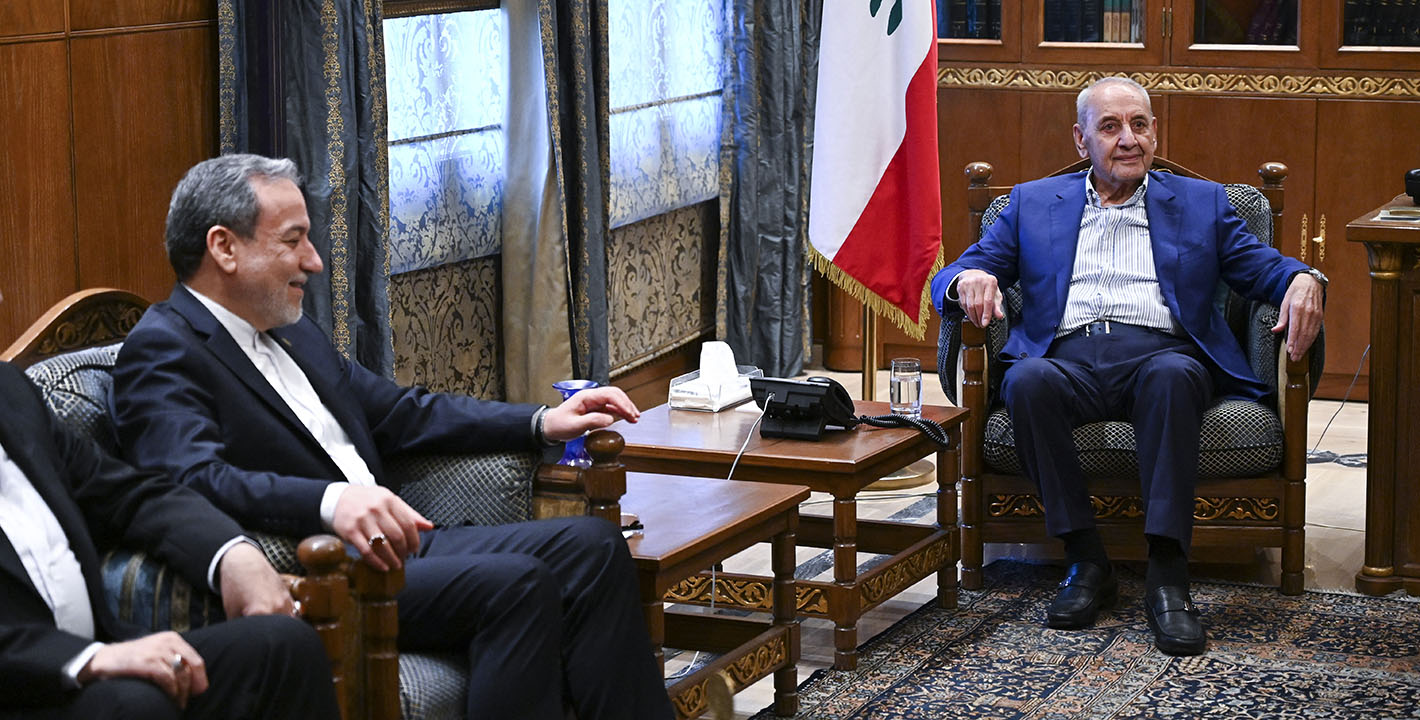
A prerequisite of serious talks is that the country’s leadership consolidates majority national support for such a process.

Michael Young
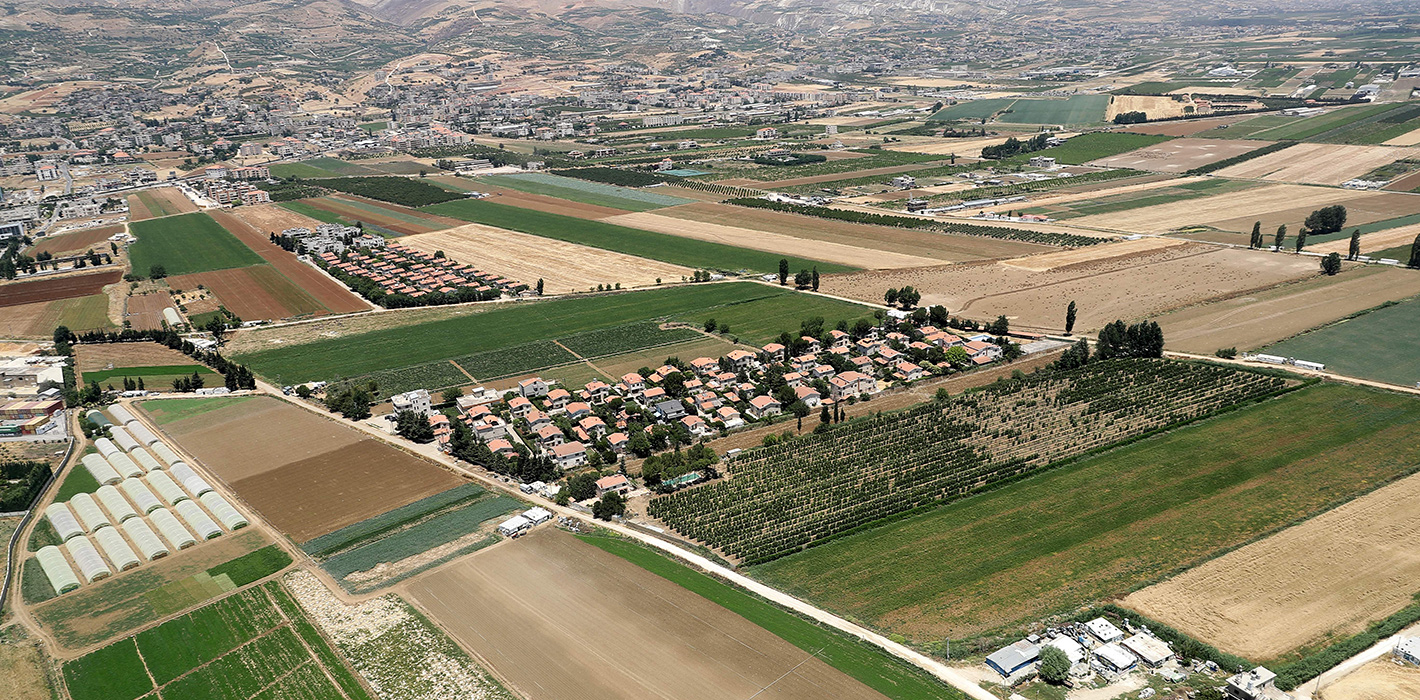
When municipalities and local actors are empowered with regulatory authority, knowledge, and resources, they can fill critical governance gaps.

Sabine Saad
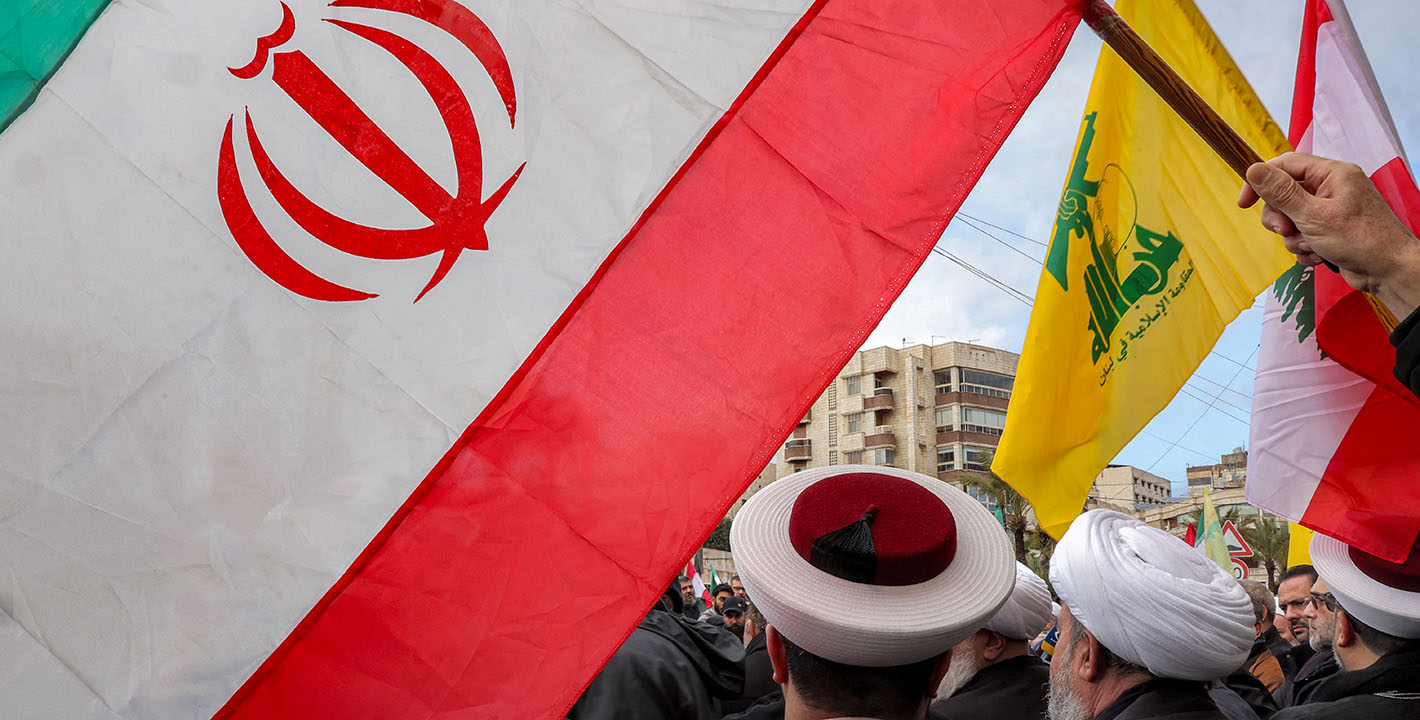
The community seeks maintain a distance from Hezbollah, and an even greater one from normalization with their southern neighbor.
Mohamad Fawaz
Unless Beirut lowers expectations, any setbacks will end up bolstering Hezbollah’s narrative.
Mohanad Hage Ali
Europe has been standing by while its Southern neighborhood is being redrawn by force. To establish a path to peace between Israel and Lebanon, it’s time for Europeans to get involved with hard power.

Rym Momtaz