

Article
If Washington cannot adapt to the ongoing transformations of a multipolar world, its superiority will become a liability.
Amr Hamzawy
How large foreign policy shifts happen despite pressures to maintain the status quo.
Making strategic changes in foreign policy is difficult for the United States. Consider, for example, the challenges that former president Donald Trump and current President Joe Biden faced in their administrations’ efforts to withdraw U.S. military forces from Afghanistan. Despite years of failing efforts to bring peace and stability to that country, and limited evidence that much improvement would come without a major reorientation of the U.S. approach, resistance to changing course was enormous. It took an outsider, Donald Trump, to set the process in motion and a long-time insider, Joe Biden, to finish it. The early 1970s U.S. withdrawal from Vietnam, which very few would criticize today, also took several years, even after a huge protest movement at home and abroad demanded it.
For strategic change to materialize, the election of a president who wants change is necessary but not sufficient. Trump’s effort to put America’s global role on a new course, whatever its strengths and weaknesses, is a case in point. In areas where his ideas challenged received wisdom in the Republican Party, Congress, or the national security bureaucracy, he was stymied. Only where Trump pursued goals already favored by important groups in the foreign policy establishment did he get results. For example, he was able to tear up the Iran nuclear deal because this action had long-standing and deep support among Republican leaders, but he failed to withdraw U.S. forces from Syria because few others agreed. Trump’s approach to foreign policy generated immense drama but limited change in America’s role in the world. Regardless of whether one thinks this outcome was for better or worse, it is testimony to the power of continuity in U.S. foreign policy.
It took an outsider, Donald Trump, to set the process in motion and a long-time insider, Joe Biden, to finish it.
Today, a growing number of analysts argue that the United States needs a major strategic reorientation. They contend that the United States needs to be more selective in its commitments and engagements if it is to remain secure and prosperous in the decades to come. The era of American hyperpower is over, and the country cannot afford a policy of largesse everywhere and at all times. This does not mean it should withdraw from the world, overturn all its existing commitments, or make no new ones. But without greater discipline in the commitments the United States makes, and without retrenchment from some, its foreign policy may become prohibitively costly and risky while the highest priorities suffer from neglect. At worst, staying on the current trajectory could set the stage for a catastrophic global war.
The United States enjoyed unrivaled supremacy in the two decades after the end of the Cold War, with relative and absolute military and economic capabilities that far outstripped those of any other world power. This position of extraordinary privilege allowed it to pursue policies without worrying too much about how they were viewed by or affected other world powers. Primacy was a strategic luxury that permitted the United States to adopt a transformative foreign policy agenda aimed at building a liberal world order with itself at the center. This approach initially had a strategic logic behind it and achieved a great deal of good. The United States helped to stabilize the war-torn Balkans in the 1990s and increased the chances that democracy would take root in Central and Eastern Europe. Hundreds of millions of people around the world were lifted out of poverty in this period. Yet the same strategic luxury also permitted Washington to pursue a far-ranging global campaign in the wake of the September 11, 2001, terrorist attacks that led it to commit the strategic blunder of invading Iraq and turned a targeted anti–al Qaeda campaign in Afghanistan into a nation-building operation that ultimately failed. It also led to overreach in Europe and set the stage for overreach in Asia.
This legacy leaves the United States with an approach to the world that is poorly adapted to the challenges of today and tomorrow. U.S. officials have long been concerned about the rise of China and a revanchist Russia, but they focused on other issues until recently. Avoiding the realities of America’s relative decline in power and legitimacy has come back to bite the United States since the mid-2010s, when Russian President Vladimir Putin launched the war on Ukraine and Chinese President Xi Jinping put the country on a more nationalist and assertive course. The United States now faces a more multipolar world than ever in its history as the world’s leading power. In the coming decades, great-power dynamics will decide fundamental matters of war and peace, prosperity and security, and cooperation and competition. This emerging new international reality, coupled with the dismaying outcomes of U.S. wars in Iraq and Afghanistan, suggests that the country would benefit if it could reform and update its approach to the world. Doing so, however, will be exceedingly difficult.
U.S. foreign policy deals with every nation in the world, every potential transnational issue, and every world institution. America’s approach to the world is also highly institutionalized. These realities impede a new president or administration from introducing a major change, especially if that change involves being more selective and doing less. This report identifies and analyzes the major sources of resistance to strategic change in the United States so that those seeking to shift the country’s course, particularly in the context of a new administration, will have a better picture of how this can be done.
Strategic change involves many factors, and this report cannot claim to have identified all of them. Some factors may matter in the future that have not existed in the past. But by analyzing cases of strategic change since 1945, our research does indicate that the following factors are especially important:
Not all of these factors must be present for change to occur. However, they were present in several instances of significant foreign policy change in the last seventy-five years. Scholarship on the making of foreign policy also highlights their role.
The core questions that guided the research for this report are:
We considered thirty possible strategic change attempts since 1900 before narrowing the focus down to five, all of which took place after World War II:
For each case we asked a basic set of questions about the nature of the attempted strategic change and the political and social forces that either drove or resisted it. The cases presented here are not exhaustive studies of these events but concise analyses of how and why policy changed. We then bolster the case studies with findings in relevant secondary literatures, largely from political science, including subfields such as American political development, comparative politics, international relations, and organizational theory. We also examined the business literature on sunk costs and psychology scholarship on prospect theory, motivational theory, and more.
No two instances of foreign policy change are the same in scope or scale, and there is no bright line between mere policy change and truly strategic change.
No two instances of foreign policy change are the same in scope or scale, and there is no bright line between mere policy change and truly strategic change. A 1990 study identifies four types of foreign policy change, ranging from adjustments of policy to major international reorientations.1 We have focused on changes closer on the spectrum to the latter to qualify as strategic: these changes had major implications on their own or were emblematic of an administration’s wider effort at reorientation. Tellingly, the most sweeping strategic change in U.S. foreign policy of the last eight decades came through the national trial of the Second World War.

Senior Fellow and Director, American Statecraft Program
Christopher S. Chivvis is the director of the American Statecraft Program at the Carnegie Endowment for International Peace.

Former Senior Fellow, American Statecraft Program
Jennifer Kavanagh was a senior fellow in the American Statecraft Program at the Carnegie Endowment for International Peace.
Sahil Lauji
Former James C. Gaither Junior Fellow, American Statecraft Program
Sahil Lauji was a James C. Gaither Junior Fellow in the Carnegie American Statecraft Program.
Adele Malle
Former James C. Gaither Junior Fellow, American Statecraft Program
Adele Malle was a James C. Gaither Junior Fellow in the Carnegie American Statecraft Program.
Samuel Orloff
Former James C. Gaither Junior Fellow, American Statecraft Program
Samuel Orloff is a James C. Gaither Junior Fellow in the Carnegie American Statecraft Program.

Senior Fellow, American Statecraft Program
Stephen Wertheim is a senior fellow in the American Statecraft Program at the Carnegie Endowment for International Peace.
Reid Wilcox
Former Research Analyst
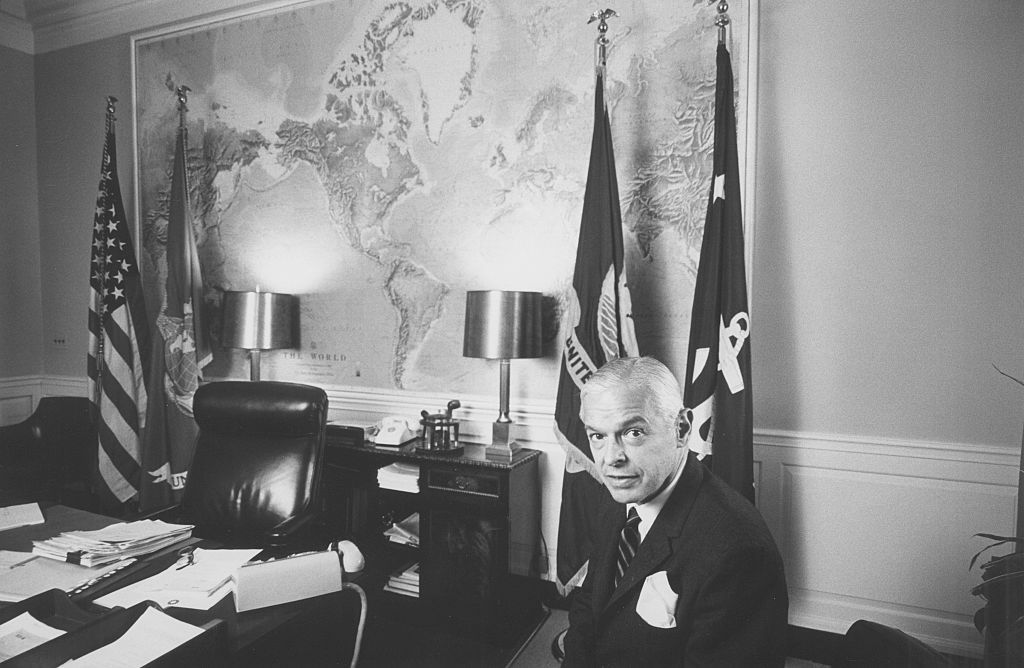
Former secretary of state Dean Acheson famously called the National Security Council (NSC) policy paper NSC-68 “one of the most significant documents in our history.”2 Its adoption in 1950 under Truman brought about a strategic shift in U.S. foreign policy that set the stage for at least the next two decades of the Cold War. It spurred increased defense spending, globalized the U.S. strategy of containment, and moved away from a deterrence strategy focused largely on nuclear weapons. There was considerable opposition to NSC-68 within the administration and in Congress. Nevertheless, a range of factors led to its adoption over the first half of 1950, including personnel changes, bureaucratic maneuvering, a concerted effort to sell the new strategy, and above all the outbreak of the Korean War in June 1950.
On September 23, 1949, Truman shocked the country by announcing that the Soviet Union had successfully tested nuclear weapons.3 The policy document known as NSC-68, drafted by a cross-departmental study group, began as a reevaluation of American strategy in light of this event.4 With the end of the U.S. atomic monopoly, officials believed that the strategic advantage the United States held over the Soviet Union was no longer assured.5 Paul Nitze, the State Department’s director of policy planning who led the exercise, feared that if Washington did not increase defense spending, U.S. conventional forces would be paralyzed, creating a dangerous overreliance upon a fleeting nuclear advantage.6 He also disagreed with the assessment, developed under his predecessor George Kennan, that the Soviets would not become more aggressive once in possession of nuclear weapons. To the contrary, Nitze believed a nuclear-armed Soviet Union would adopt a far more bellicose “first-strike mentality.”7
Other international events also caused policymakers to reevaluate U.S. strategy. These included Mao Zedong’s victory in China’s civil war and the formation in October 1949 of the People’s Republic of China (PRC), the Soviet formation of East Germany that same month, and the Treaty of Friendship signed between the Soviet Union and the PRC in February 1950.8 These events pushed the drafters of NSC-68 to take an expansive, global view of the Cold War. In particular, Nitze warned of the dangers of the PRC serving as a “springboard” for Communist advances in Asia, and he cautioned that the Soviet Union was deepening its engagement in Austria, Germany, Indochina, and Korea.9
In short, NSC-68’s authors saw a Soviet-led Communist monolith that was on the advance, and they feared that America’s relative position had degraded sharply over the course of 1949–1950.10
At the outset, NSC-68 was met with skepticism inside and outside the government. Within the executive branch, pushback centered upon the cost of its recommendations and other ramifications of its analysis, while prominent Republicans in Congress and outside of the government raised partisan objections.
The proposed rapid military buildup in NSC-68 was especially controversial. No less than the secretary of defense Louis Johnson initially opposed the strategy, at one point referring to Nitze’s project as “a conspiracy.”11 Omar Bradley, the chairman of the Joint Chiefs of Staff, similarly worried that profligate defense spending would damage the nation’s industry, a determinant of American power.12 Beyond the defense establishment, Bureau of the Budget officials cautioned that higher military expenditures could restrict economic growth.13 Even those who were sympathetic to elements of NSC-68—including the former chair of the Atomic Energy Commission David Lilienthal and the assistant secretary of state for public affairs Edward W. Barrett—believed that many of its goals could be achieved without the steep increases in defense spending for which it called.14
Serving and former diplomats also objected. Kennan, for example, disagreed with the rationale behind the study, rejecting the notion that “the ‘cold war,’ by virtue of events outside of our control, has suddenly taken some drastic turn to our disadvantage” due to the Soviet testing of nuclear weapons, a development he viewed as predictable.15 Charles Bohlen, the former ambassador to Moscow, contended that NSC-68 oversimplified Soviet objectives and created a false equivalency between Soviet capabilities and Soviet intentions.16 Assistant secretary of state for economic affairs Willard Thorp suggested that the yawning gap between the Soviet and American economies would limit Moscow’s ability to challenge the United States.17 The Central Intelligence Agency (CIA), moreover, argued that the Kremlin was unlikely to assume the highly aggressive posture that undergirded the arguments of Nitze and his coauthors.18 Echoing Kennan, the eminent scientist J. Robert Oppenheimer criticized NSC-68’s embrace of the hydrogen bomb for failing to end reliance upon nuclear weapons.19
When the White House began to act upon NSC-68’s recommendations, Republicans again objected. Senator Robert Taft castigated the administration for ceding “strategic initiative.”20 By allowing the Soviet Union to determine where the United States would make a stand against the advance of communism, NSC-68 defined U.S. interests in terms of the Soviet threat rather than through objective criteria independent of the adversary.21 Taft also attacked the spending increases, arguing there was a “limit to what a government can spend in a time of peace and still maintain a free economy, without inflation.”22 Beyond Congress, former president Herbert Hoover criticized Truman for pursuing aggressive policies that might damage the economy.23 Even the internationalist wing of the Republican Party criticized the strategic shift initiated by NSC-68, with later secretary of state John Foster Dulles accusing the Truman administration of “unbalancing the budget [and] lowering the value of the dollar” with a program that “threatened civil liberties at home.”24
Opposition to the strategic change NSC-68 represented was thus substantial, and the fate of its policy recommendations was initially far from certain.
In 1950, NSC-68 gained momentum for several reasons, including personnel changes, politicking within the federal bureaucracy, and concerted efforts inside and outside the government to promote the new approach. Moreover, the outbreak of the Korean War in June 1950 proved decisive in ensuring the implementation of NSC-68.
In 1950, NSC-68 gained momentum for several reasons, including personnel changes, politicking within the federal bureaucracy, and concerted efforts inside and outside the government to promote the new approach.
Personnel shifts in the administration that preceded the drafting of NSC-68 were crucial in making larger defense expenditures possible. Kennan departed as head of the State Department’s policy planning staff at the end of 1949, allowing the more hawkish Nitze to succeed him.25 Nitze’s promotion coincided with the end of Frank Pace’s tenure as head of the Bureau of Budget, which removed another well-positioned opponent of increased defense spending.26 Such changes sidelined the remaining proponents of a budget ceiling, such as the secretary of defense, Johnson, and created an opening for advocates of higher spending to “bludgeon the mass mind of ‘top government.’”27
The authors of NSC-68 also worked to overcome their opponents through savvy politicking and bureaucratic maneuvering during the drafting process.28 Despite its title, NSC-68 was not composed by staff on the NSC; it was the product of a small study group of like-minded officials from the State Department and the Pentagon. By operating outside the bureaucracy’s formal channels and including many of his deputies, Nitze ensured that his coauthors were already favorable to his strategy.29 When presented with a “virtual fait accompli,” Johnson acquiesced to NSC-68.30 Nitze also made sure to get Acheson’s support before initiating the study.31 As Acheson advised, he omitted estimates of the spending increases implicit in NSC-68’s recommendations.32
Nitze and his coauthors also leveraged the thinking of the president’s domestic policy aides. The chair of the Council of Economic Advisors, Leon Keyserling, embraced Keynesian deficit spending. Keyserling had domestic programs in mind, but if the U.S. economy could support enlarged government spending in one area, it could do so in another.33
Nitze also denied that NSC-68 amounted to strategic change in the first place, downplaying its significance and framing it instead as strategic continuity. He continued to argue that NSC-68 did not break with Kennan’s approach and was consistent with established U.S. doctrine.34 This tenuous claim reflects a calculation that deemphasizing the extent of the document’s departure from the status quo would increase the likelihood of the adoption of its prescriptions.35
Administration officials went to great lengths to secure public support for the recommendations of NSC-68. They believed the public desired resolute action in response to the Soviet Union but might blanch at the massive spending program the document entailed.36 The administration thus launched a public relations campaign to convince the American people that the Soviet Union was a serious threat and that a military buildup was needed to face it. NSC-68’s supporters addressed the public to “whip up sentiment.”37 Barrett called for a “scare campaign” to sell the document,38 and many prominent officials started talking about the Soviet threat in hyperbole.39 In this vein, Acheson delivered a series of speeches in which he warned: “There has never, in the history of the world, been an imperialist system that compares with what the Soviet Union has at its disposal.”40 Attacking those concerned the strategy would blow a hole in the federal budget, Truman said that the “real threat to our security isn’t the danger of bankruptcy. It is the danger of Communist aggression.”41 He went even further after the outbreak of the Korean War, calling for the armed forces to swell to 3.5 million and declaring a state of emergency in the hope that this action would “have great psychological effects on the American people.”42
Proponents of NSC-68 were bolstered by a surge of anti-Communist sentiment. In February 1950, Republican senator Joseph McCarthy leveled his first accusations of Communist infiltration against the administration, reinforcing its need to appear “tough” on global communism.43 Elite opinion and pressure groups also played a role, exemplified by the Committee on Present Danger, an anti-communist interest group founded in late 1950 whose membership came to include former undersecretary of defense Tracy Voorhess, Harvard’s James B. Conant, Vannevar Bush of the Carnegie Institution of Washington, and former secretary of war Robert Patterson.44
Despite these efforts, Truman initially shelved NSC-68 due to its lack of cost estimates.45 What changed his calculus was the outbreak of the Korean War in June 1950.46 U.S. officials interpreted North Korea’s invasion of South Korea as evidence that the Soviet Union was mounting an international offensive.47 The attack also appeared to illustrate that a nuclear deterrent alone was insufficient for preventing Communist belligerence and that a conventional military buildup would be beneficial.48 Meanwhile, the sudden transformation of the Korean Peninsula from a peripheral theater of Cold War competition to a high American priority appeared to validate NSC-68’s broad vision of U.S. security interests.49
As the war went on, the challenges faced by U.S. forces brought political attention to insufficient force readiness.50 Negative coverage of the war reflected poorly on Johnson and his fiscal discipline. His firing by Truman in September 1950 removed perhaps the most prominent opponent of higher defense spending.51 For its part, Congress passed two supplemental appropriations bills with little dissent, allocating $35.3 billion beyond the $13.3 billion set aside for FY 1951.52 This action crossed the proverbial Rubicon: as the political scientist Robert Jervis has written, “once the budget smashed through the old ceiling and the economy did not fall apart, much of the resistance collapsed.”53 The Korean War also brought about a new emphasis on Asia and a fresh focus on the importance of conventional capabilities for the waging of limited wars against non-Soviet Communist states.54 Without the Korean War, NSC-68 might not have been adopted and implemented.55
NSC-68 shaped the scale, scope, and nature of U.S. Cold War strategy in the 1950s and 1960s. The first effect was on spending levels. Immediately after the Second World War, the United States cut annual defense spending from $81.6 billion in 1945 to $13.1 billion in 1947 while over the same period reducing the number of men under arms from 12 million to 1.6 million.56 Even after the Cold War began in the late 1940s, politicians and policymakers sought to limit defense spending. Truman, with bipartisan support in Congress, committed to keeping the Pentagon budget below $15 billion per year, and military spending consumed around 5 percent of gross national product (GNP) from 1947 to 1950.57 Kennan believed that the United States could pursue a strategy of containment within the confines of the budget ceiling, relying merely on “two high-quality Marine divisions.”58 NSC-68 ushered in a reversal of course, stating that “budgetary considerations will need to be subordinated to the stark fact that our very independence as a nation may be at stake.”59 Defense spending increased precipitously, far exceeding Truman’s budget cap. From 1952 to 1954, the military budget swelled to 15 percent of GNP, constituting almost 70 percent of federal spending.60 Fiscal conservatism had given way to a new “military Keynesianism,” which “unshackled defense budgets from spending limits that had previously seemed economically and politically immutable.”61
NSC-68 ushered in a reversal of course, stating that “budgetary considerations will need to be subordinated to the stark fact that our very independence as a nation may be at stake.”
NSC-68 also globalized the strategy of containment, broadening the scope of America’s military role. After the Second World War, Kennan had argued that three of the world’s five global centers of power were located in Europe and that the United States ought thus to focus its efforts there.62 Other regions, including most of Asia, were initially relegated to secondary priority.63 In contrast, NSC-68 rejected “distinctions between peripheral and vital interests.” No longer would containment be limited to select core power centers; the document’s authors embraced a maximalist vision of a global or “Eurasian” defense perimeter.64 The United States proceeded to strengthen its defenses in Western Europe and Asia simultaneously.65
Finally, NSC-68 settled a debate over what role nuclear weapons ought to play in defense policy. Advocates of a defense strategy heavily weighted toward nuclear deterrence pointed to the military and fiscal advantages these powerful new weapons offered,66 whereas detractors, like Kennan and Lilienthal, underscored the potentially catastrophic risks that such a strategy would entail.67 NSC-68 resolved this debate, not by taking a side but by calling for a large buildup of conventional forces alongside nuclear weapons.68 Nitze later framed the document as a move “away from primary reliance upon nuclear weapons, and towards building up conventional forces.”69 But this did not mean the United States diminished the size of its nuclear arsenal or embraced a no-first-use policy.70 It undertook in parallel development of the hydrogen bomb.71 By coupling nuclear advances with a focus on conventional deterrence, NSC-68’s authors sought to ensure that the United States did not wholly depend on nuclear deterrence in the event of a limited confrontation with the Soviet Union.72
These shifts proved lasting. Even though president Dwight Eisenhower aimed for a less costly defense posture underwritten by nuclear deterrence in his New Look security policy, he did not break definitively with NSC-68’s strategy.73 His administration continued the global approach, backing coups in Guatemala and Iran, formulating the “domino theory” for Southeast Asia,74 and committing the United States to the defense of South Vietnam.75 Defense spending decreased initially but remained well above Truman’s old budget ceiling.76 On the other hand, NSC-68’s pessimistic assessment of Soviet intentions faded after the Korean War.77
The next president John F. Kennedy followed in Nitze’s footsteps by arguing that his predecessor had placed undue emphasis on nuclear deterrence.78 His successor Lyndon B. Johnson highlighted the legacy of NSC-68 in 1964 when he declared: “We are the richest nation in the history of the world. We can afford to spend whatever is needed to keep this country safe.”79 The deepening U.S. commitment in South Vietnam in the 1960s was one consequence of NSC-68’s globalization of Cold War containment.80 Scholars have even identified links between Nitze’s assessment of the Soviet Union in the document and the assertive rhetoric of presidents Ronald Reagan and George W. Bush.81 U.S. defense expenditures have never again dropped to pre–Korean War levels, and the United States continues to spend enormous sums on defense.
Senior Fellow and Director, American Statecraft Program
Christopher S. Chivvis is the director of the American Statecraft Program at the Carnegie Endowment for International Peace.
Former Senior Fellow, American Statecraft Program
Jennifer Kavanagh was a senior fellow in the American Statecraft Program at the Carnegie Endowment for International Peace.
Sahil Lauji
Former James C. Gaither Junior Fellow, American Statecraft Program
Sahil Lauji was a James C. Gaither Junior Fellow in the Carnegie American Statecraft Program.
Adele Malle
Former James C. Gaither Junior Fellow, American Statecraft Program
Adele Malle was a James C. Gaither Junior Fellow in the Carnegie American Statecraft Program.
Samuel Orloff
Former James C. Gaither Junior Fellow, American Statecraft Program
Samuel Orloff is a James C. Gaither Junior Fellow in the Carnegie American Statecraft Program.
Senior Fellow, American Statecraft Program
Stephen Wertheim is a senior fellow in the American Statecraft Program at the Carnegie Endowment for International Peace.
Reid Wilcox
Former Research Analyst
When he took office in 1969, Richard Nixon feared the United States was falling behind in the Cold War competition with the Soviet Union. To restore its competitiveness, he undertook a major reorientation of foreign policy. Perhaps the most important and most difficult element of that reorientation was the withdrawal of American troops from Vietnam, where they had been engaged in an escalating war for a decade. Public pressure for change was immense, and Nixon faced limited resistance. He overcame what resistance he did face through secrecy and centralizing decisionmaking in the White House.
Like the war itself, the withdrawal left scars on the national psyche.
The withdrawal from Vietnam marked a major change in America’s role in the world, a concrete reversal of NSC-68’s strategy of countering Communist forces everywhere. Like the war itself, the withdrawal left scars on the national psyche. Looking back nearly half a century later, few would criticize Nixon’s decision to exit the conflict, though some would criticize its slow pace. This was one of the most important cases of U.S. strategic change in the twentieth century and the only of the cases examined in this report that involved a successful attempt at retrenchment.
By the time Nixon was elected president, some 530,000 U.S. troops were in Vietnam, a massive increase from the 16,300 deployed there five years earlier.82 The Tet Offensive launched by North Vietnam in January 1968 had forced President Lyndon B. Johnson and his advisers to admit that continued escalation of military involvement was unlikely to produce victory at any sort of acceptable cost. Johnson thus had partially halted the U.S. bombing campaign in the spring of 1968 and pushed for a negotiated settlement, while declining to run again for president.83
This was one of the most important cases of U.S. strategic change in the twentieth century and the only of the cases examined in this report that involved a successful attempt at retrenchment.
Nixon too saw that withdrawal as essential, but not for the same reasons. He believed it was the key to strengthening the United States in its long-term contest with the Soviet Union. Nixon and his influential National Security Advisor Henry Kissinger wanted to reduce tensions and the costs of Cold War competition by pursuing détente with Moscow and opening relations with the People’s Republic of China.84 They aimed to reduce the defense burden and give the United States more flexibility in a world order that was becoming less dominated by American power.
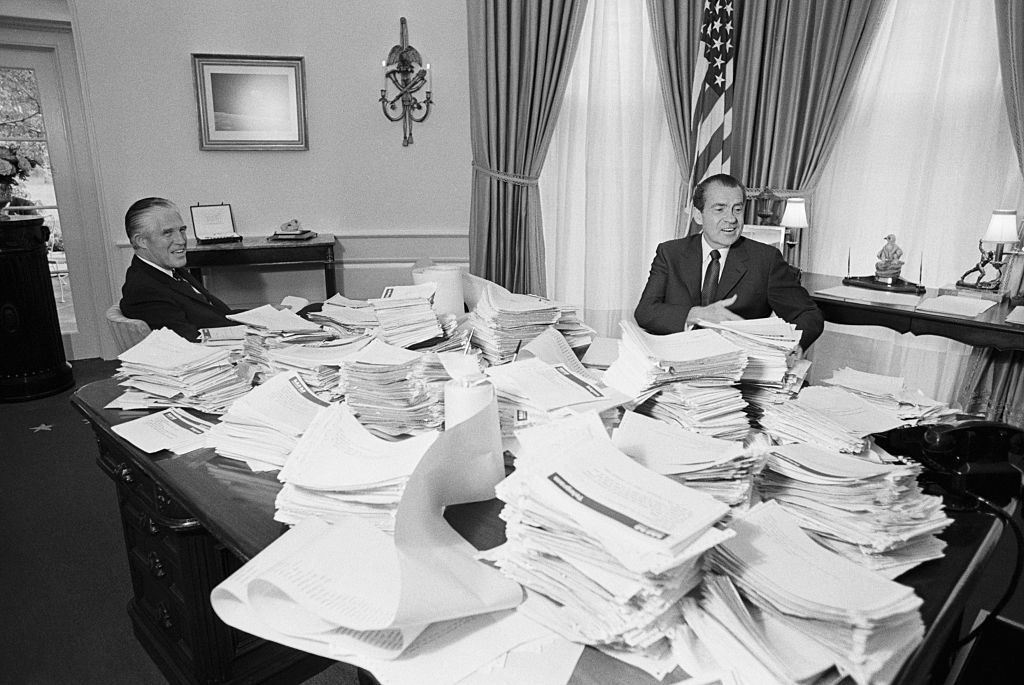
Nixon and Kissinger believed their strategic vision necessitated a withdrawal from Vietnam, but not one that would look like a defeat and damage U.S. prestige. Hence Nixon took an unyielding approach to peace negotiations, launching indiscriminate bombing campaigns aimed at getting a better deal, and gradually turning the war over to South Vietnam through a policy of Vietnamization.85
Nixon and Kissinger faced limited resistance to their plan to withdraw from Vietnam. Congress, the public, and much of the defense community all supported the decision. Some even wanted to speed the withdrawal. Nevertheless, there were constituencies that pushed back.
The most important constituency opposing withdrawal was made up of hawkish conservatives, inside and outside Congress, who feared that losing the war would diminish U.S. credibility with key allies and strategic competitiveness with the Soviet Union and China. They also opposed détente in general, preferring a hardline approach to all aspects of U.S. foreign policy. But, paradoxically, they gave Nixon and Kissinger cover to pursue a gradual withdrawal, serving as a bulwark against antiwar members of Congress who were pushing for an immediate withdrawal as well as cuts to defense spending.86 These hawks still had to be placated as the withdrawal continued, and they continued to hold some sway over Nixon’s decisions, especially as the 1972 election approached, because he depended on their support within his Republican Party.
A second, important group of opponents was the military leadership, among whom the withdrawal was not at all popular. This included high-level officers in the Pentagon, such as Army Chief of Staff William Westmoreland and Chairman of the Joint Chiefs of Staff Earle Wheeler, as well as officers deployed in Vietnam.87 General Creighton Abrams, for example, the commander of forces in the country, strongly opposed withdrawal.88 He rejected Nixon’s strategy of Vietnamization on the grounds that no amount of training, military assistance, or weaponry would allow the South Vietnamese forces to become self-sustaining.89 Other military leaders believed that they could still win the war if given additional resources and allowed to fight without restrictions.90 For example, they hoped that Congress would generate additional troops by activating the reserves.91 They painted far more optimistic assessments of the war and its progress than did outside observers or the press—assessments later criticized as misleading and incomplete.92
Finally, the withdrawal was also opposed by South Vietnamese leaders, who worried correctly that they would be defeated without American support. To prevent them from spoiling the peace talks, Nixon and Kissinger excluded South Vietnamese officials from their secret negotiations with North Vietnam. South Vietnamese President Nguyen Van Thieu managed to prevent the signing of the October 1972 version of Kissinger’s peace agreement, calling it a recipe for “suicide.” He fiercely protested the “ceasefire in place” provision, which allowed North Vietnamese forces to remain inside southern territory.93
The U.S. withdrawal from Vietnam was widely supported domestically and internationally. However, many supporters favored a more rapid pullout than the one Nixon ultimately executed. The White House relied on secrecy and on its policy of Vietnamization to assure them that the war was coming to an end.
Nixon overcame resistance to his intention the way he overcame most resistance during his time in office: through secrecy and centralized decisionmaking. He hid from Congress and the public the expansion of U.S. bombing in Cambodia and Laos in 1969,94 the truth about the pitfalls of Vietnamization, and, for a time, the negotiations for a peace deal. He also placed most decision and implementation authority in the hands of Kissinger and the NSC.95 This allowed Nixon to stamp out most bureaucratic resistance.
At the same time, the president overcame the resistance of conservative hawks by periodically escalating bombings and conducting the withdrawal slowly.
The pace of withdrawal was in theory tied to the progress of Vietnamization, but in reality the link between the two was tenuous, and most within Nixon’s circle knew that South Vietnam’s forces were unlikely to hold up without U.S. support.96 Vietnamization nevertheless bought time and reduced political pressure for a faster withdrawal. The process allowed Kissinger to conduct lengthy negotiations with North Vietnam until an agreement was eventually signed in January 1973, just before the start of Nixon’s second term.97
Nixon had the support of many in the U.S. foreign policy establishment, including principals within his administration. Key among these was the defense secretary, Melvin Laird. A strong supporter of Vietnamization, he recommended a significantly faster withdrawal than Nixon wanted. His position was driven by his on-the-ground assessment of the war and his sense that the public was not willing to tolerate the war any longer.98 Also supportive was secretary of state William Rogers, though he was largely sidelined.99
There was strong bipartisan support in Congress for withdrawal.100 Many members cheered Vietnamization as a sign of progress. Many others, however, advocated for a faster withdrawal along with cuts to the defense budget. Democratic senators J. William Fulbright, Mark Hatfield, and George McGovern were some of the loudest voices for withdrawal.101 The Republican leadership in Congress played an especially important role by making it clear that Nixon could lose the party’s political support if he did not follow through.102 At the same time, the president overcame the resistance of conservative hawks by periodically escalating bombings and conducting the withdrawal slowly.103 To avoid obstacles in Congress, Nixon relied on executive action and covert operations, hiding from members that he was expanding the war into Cambodia and Laos as well as details of the negotiations.104 Laird also worked to overcome congressional pressure, serving as a go-between and spokesman to sell Nixon’s approach to withdrawal.105
Nixon overcame the resistance of the military leaders in a few ways. First, he relied on Laird, who supported withdrawal, to win them over and push the process forward. Second, the secrecy and consolidated decisionmaking authority stripped the Pentagon of much of its visibility into the White House’s actions. Finally, Nixon maintained the loyalty of military commanders by continuing to bomb the region heavily and giving assurances that he wanted to win the war. And, perhaps most important, the authority of the hawks in the military was greatly undermined by the publication of the leaked Pentagon Papers in 1971, revealing that U.S. civilian and military leaders had been lying to the public about how the war was going.106
Paradoxically, the goal of withdrawal was helped by congressional opposition to how Nixon was implementing this goal. When Nixon delayed drawing down troops, Congress tried to force his hand. In December 1969, it passed an amendment to the defense spending bill that cut off funding for operations in Laos and Thailand. When Nixon sent thousands of troops into Cambodia in the spring of 1970, Congress passed a second amendment that cut off funding to operations there as well.107 In January 1971, it also repealed the 1964 Gulf Tonkin Resolution, which had provided the authorization for the war in Vietnam. Congress also considered, but did not pass, numerous bills that would have demanded an immediate withdrawal. In 1973, after the peace agreement was signed, it cut off funding for any further military operations in the region, although it allowed military and humanitarian aid to continue.108 This prevented Nixon from following through on his intention to use bombing to enforce the agreement. Finally, that same year, Congress passed the War Powers Resolution, which required presidents to notify it within forty-eight hours of sending armed forces into combat and to obtain congressional authorization for hostilities within sixty days. Without Congress’s gradual escalation of pressure, the Nixon administration might have taken longer to withdraw from Vietnam.109
Paradoxically, the goal of withdrawal was helped by congressional opposition to how Nixon was implementing this goal
The change in strategy in Vietnam was also the product of a massive outcry from the American public, which firmly opposed continuing the war. According to Pew data, in 1965, 24 percent of respondents answered “yes” to the question of whether the United States had made a mistake by sending troops to Vietnam, whereas 60 percent said no. In 1968, as Nixon ran for president, 46 percent said the military campaign was a mistake while 42 percent were still supportive. When he took office in January 1969, 52 percent said the war was a mistake; at the start of his second term in 1973, that number had reached 60 percent.110 The increasingly negative polls placed a significant drag on Nixon’s personal approval numbers. Public opposition to the war led to mounting protests and marches, which exerted further pressure on the president. For example, monthly protests in 1969 involved a candlelit vigil outside the White House where the names of soldiers who had died in Vietnam were read aloud.111 Nixon tried to quell public discontent by appealing to the “silent majority” to ask for more time and outlining the dangers of an immediate withdrawal. This calmed the public for a short time, but the effect did not endure.112 He knew that failure in Vietnam had been Johnson’s downfall and was determined not to meet a similar fate.113 As a result, the approaching 1972 election drove the timing of withdrawal.
Factors at the international level also helped implement withdrawal. In South Vietnam, Thieu’s dependence on Washington meant he was unable to stop the withdrawal. After extracting a promise for continued military assistance, he signed a deal in January 1973 that was largely the same as the one he had scuttled months earlier.114 China and the Soviet Union were supportive of Nixon’s decision, hoping it would lead to unification under Communist rule. This did not mean they were ready to help him reach a peace agreement, however, because they saw little advantage in making things easy for the United States and because they were trying to outmaneuver each other for influence in Vietnam.115 In 1970 and 1971, for example, the Soviet Union increased funding to North Vietnam while Chinese leaders, including Mao, encouraged its leader, Le Duc Tho, to focus on fighting and winning an outright victory.116 Moscow and Beijing became somewhat more helpful in pushing North Vietnam to negotiate in 1972 after Nixon and Kissinger floated a proposal that asked only that a “decent interval” pass between the U.S. withdrawal and any change in the political situation in Vietnam.117 Nixon and Kissinger also managed to convince the Soviet and Chinese leaders that closer ties would be possible if the Vietnam issue were put to rest.
Nixon took U.S. troops out of Vietnam, but only in 1973 after the death of thousands more American soldiers and hundreds of thousands of Vietnamese soldiers.118 The challenges Nixon faced along the way suggest the difficulty of making major foreign policy changes, especially when they require reducing U.S. global commitments and even when those changes are widely popular.
Given the fall of Saigon in 1975, it is debatable whether Nixon achieved “peace with honor,” but he did terminate U.S. involvement in the country. His success in implementing this major strategic change depended on several factors, including especially the support of a majority of Congress, which backed his general aims if not his methods; strong executive authority and the use of secrecy; and a favorable international environment. Although public opinion and budgetary pressures were catalysts of change, they did not dictate the direction or shape of change. The biggest challenges Nixon faced were how to accommodate and blunt those in Congress and the national security community who opposed his vision.
The withdrawal from Vietnam had important and far-reaching strategic consequences, some of which last to this day. It had direct effects on the U.S. military. In 1973, Congress ended conscription.119 The draft had been one of the defining features of the Vietnam era and one of the reasons that the effects of the war ramified throughout society. The shift to an all-volunteer force improved the efficiency and effectiveness of the military.120 With the war over, the Army shifted its focus from counterinsurgency to conventional operations, with Europe back as the primary operational theater.121 Finally, the Vietnam experience led to an effort to revise the use of reserves, which had not been called up during the war and so had become a refuge for people seeking to avoid the draft. The concept of the “total force” to integrate the active and reserve components effectively was introduced.122
The withdrawal also affected Congress, which reasserted its prerogatives in foreign and defense policy. First, the War Powers Resolution, passed over Nixon’s veto, limited the authority and discretion of presidents when it came to waging war and deploying military forces.123 Second, Congress became more active in using its “power of the purse” and legislative action to force the hand of president. For example, in 1993, it passed legislation forcing the withdrawal of U.S. troops from Somalia after failed military operations.124 Some of the restrictions Congress placed on the executive branch have also had unintended effects. They pushed presidents to rely on covert action, drone strikes, and other types of activity that are less transparent and visible but over which they have full control. Third, after the Vietnam War, Congress took a larger role in shaping military spending and defense budgets. However, its involvement has arguably made it difficult to make changes to the structure of the defense budget and to cut legacy programs because military spending has become tied up with electoral politics.125 Finally, Congress took steps after the war to revise the intelligence infrastructure and authorities granted to various government agencies, again to limit the discretion of the executive branch and ensure accountability, which had been lacking under Nixon.126
More broadly, with the help of Kissinger, Nixon achieved a significant reorientation of U.S. foreign policy, although this came slowly at first. For example, the two officials reestablished ties with China and concluded a series of arms control agreements with the Soviet Union. Their success with the Nixon Doctrine, which aimed to shift defense burdens onto the United States’ allies and partners, was mixed, however. Nixon declared in his second inaugural address that “The time has passed when America will make every other nation’s conflict her own, or make every other nation’s future our responsibility, or presume to tell the people of other nations how to manage their own affairs.” Nixon kept the United States out of other major military engagements, but it still interfered in conflicts around the globe. It backed Pakistan in its 1971 war with India and sent massive military aid to support Israel in its 1973 war with the Arab states, among other interventions. But Nixon did set the stage for a more restrained U.S. foreign policy in the subsequent half-decade.127
Nixon left office before he could really exploit the room for maneuver he had created, but his successor carried forward aspects of the more restrained approach to security and military policy he had sought. Carter sought to condition U.S. support for allies on respect for human rights, but he also ultimately balanced interests and values, completing the normalization of relations with China and continuing arms control negotiations with the Soviet Union.128 The Soviet invasion of Afghanistan later forced Carter to revert to a more confrontational containment-based strategy, however. He withdrew the Strategic Arms Limitation Talks (SALT II) Treaty from the Senate, sent aid to anti-Communist regimes and insurgents with poor human rights records, and increased defense spending.129 Even as the United States shifted back to a Cold War confrontation, the specter of the Vietnam War continued to infuse foreign policy with greater restraint.
Senior Fellow and Director, American Statecraft Program
Christopher S. Chivvis is the director of the American Statecraft Program at the Carnegie Endowment for International Peace.
Former Senior Fellow, American Statecraft Program
Jennifer Kavanagh was a senior fellow in the American Statecraft Program at the Carnegie Endowment for International Peace.
Sahil Lauji
Former James C. Gaither Junior Fellow, American Statecraft Program
Sahil Lauji was a James C. Gaither Junior Fellow in the Carnegie American Statecraft Program.
Adele Malle
Former James C. Gaither Junior Fellow, American Statecraft Program
Adele Malle was a James C. Gaither Junior Fellow in the Carnegie American Statecraft Program.
Samuel Orloff
Former James C. Gaither Junior Fellow, American Statecraft Program
Samuel Orloff is a James C. Gaither Junior Fellow in the Carnegie American Statecraft Program.
Senior Fellow, American Statecraft Program
Stephen Wertheim is a senior fellow in the American Statecraft Program at the Carnegie Endowment for International Peace.
Reid Wilcox
Former Research Analyst
When he entered office in 1977, president Jimmy Carter had promised to withdraw all U.S. ground forces from South Korea, which would end a thirty-five-year commitment and drastically reconfigure one of America’s two major security alliances in East Asia. Carter had the constitutional authority as president to determine the deployment of forces abroad,130 but there was virtually no support for this policy change across the national security bureaucracy or within Congress. Carter, as a result, faced fierce opposition that led him to delay, water down, and ultimately scrap his goal of withdrawal. In Carter’s case, the lack of institutional support for his desire to impose additional restraint on U.S. overseas commitments goes a long way to explain his failure.
Carter first promised to withdraw U.S. troops from South Korea early in the 1976 presidential campaign.131 The aim was to pull all 42,000 U.S. personnel over the course of his term.132 In May 1977, he directed the withdrawal of 6,000 troops by the end of 1978. He also ordered the removal of all troops by the end of 1982. At the same time, he introduced measures intended to balance this change. These included $1.9 billion in military spending and an increase in U.S. Air Force assets in South Korea.133 Carter made it clear that Washington still intended to honor its Mutual Defense Treaty with Seoul but also that he viewed the security relationship as “not static” but dynamic and ripe for change.134
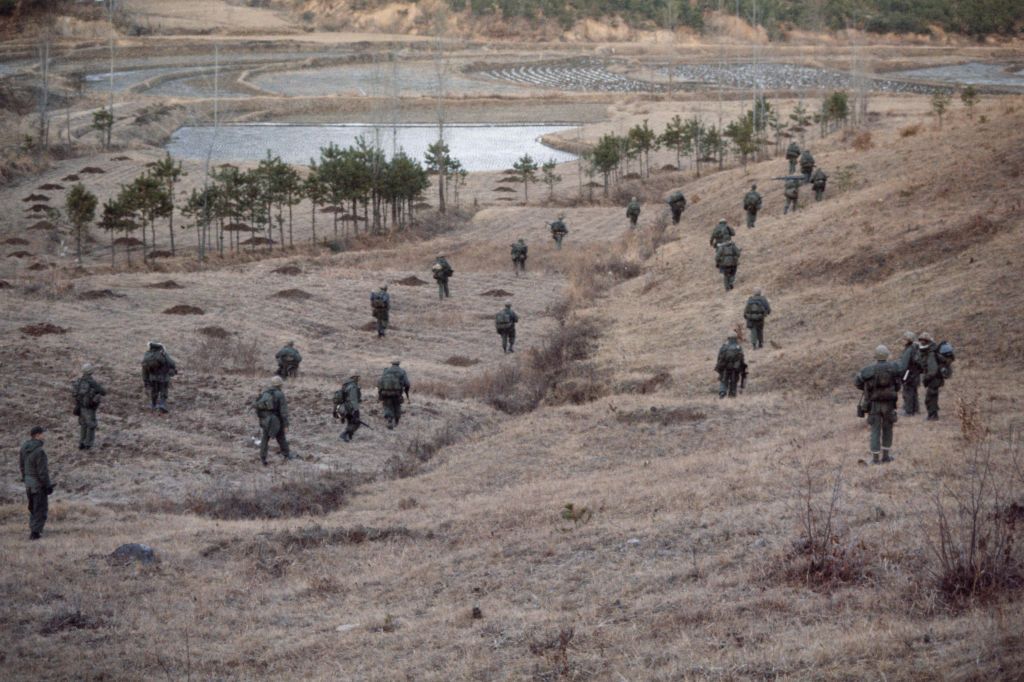
The origins of Carter’s plan reflect his broader goal of reducing U.S. foreign commitments and conditioning support for allies and partners on human rights. First, after Vietnam, Carter and many of his advisers feared being inadvertently drawn into another war in Asia, and they sought to reduce the U.S. military commitment there to avoid getting “trapped in a small and secondary country.”135 The Panmunjom Incident in the summer of 1976, in which North Korean soldiers killed two U.S. troops in a dispute in the demilitarized zone, heightened these fears in Carter’s team and the public.136 In an April 1975 poll, only 14 percent of respondents supported U.S. involvement if North Korea attacked South Korea.137 Second, human rights were a central plank of Carter’s foreign policy platform, and this made South Korean leader, Park Chung-hee, an awkward partner.138 He had seized power in a coup in 1961 and then sat atop a repressive, authoritarian state.139 Carter explicitly linked his proposed withdrawal to Park’s human rights record in a 1976 speech, saying that he believed “it should be made clear to the South Korean Government that its internal oppression is repugnant . . . and undermines the support for our commitment there.”140
There was some initial support for Carter’s withdrawal. The editorial pages of many major newspapers at the time ran supportive opinion pieces backing the withdrawal, for example, suggesting some support within the expert community for the changes Carter was proposing.141 There was also some initial congressional support. The president’s Democratic Party enjoyed a majority in both chambers of Congress, and the withdrawal had backing from several influential Democratic senators—such as George McGovern, John Culver, and Alan Cranston—who shared the president’s concern that the presence of U.S. troops in South Korea risked entrapping America in another unwanted Asian fiasco.142
But, initial support for the plan within the administration was lukewarm, and many in his own administration had doubts about the proposal.143 Carter urged his advisers that any wavering on the policy could goad Park into increasing tensions on the Korean Peninsula to prevent withdrawal, and he worked to marshal aides into supporting his policy.144 The under secretary of state for political affairs Phillip Habib supported the plan, but he reportedly spent little time trying to promote it.145 The assistant secretary for East Asian and Pacific affairs Richard Holbrooke was an early supporter and defended the policy in public in May 1977.146 (He later became a prominent opponent.)147 Many officials privately held doubts about the proposal but were publicly supportive and initially offered no resistance, reasoning that it was their duty to back the new president or resign.148 Michael Armacost, who handled South Korea at the NSC, later recalled widespread reservations as well as an initial hesitancy to voice them to the president.149 National security advisor Zbigniew Brzezinski later said that he was initially “indifferent” to the proposal.150 He was directed by Carter to serve as its defender as opposition mounted.151
Ultimately, however, constituencies opposing the withdrawal were both much larger and much more powerful and were successful in thwarting Carter’s withdrawal plans. Carter faced an uphill climb from the start, and these obstacles only grew over time.152 As the president’s early window of opportunity to implement the withdrawal closed, opposition coalesced.
The plan was very unpopular with the Army, which embarked on a “strategy of gradually leveraging Congress, media, and elements of the bureaucracy, such as the intelligence services, to exhaust a presidential administration’s resolve.”153 Army officers in South Korea began to develop “an informal plan” to oppose the withdrawal as early as March 1977,154 and they sought to cultivate closer ties with members of Congress and the intelligence community. General Cyrus Vessey, the commander of U.S. forces in Korea, later remarked that on congressional visits, “I don’t think we did anything that I would call dishonest or misleading. On the other hand, we certainly didn’t tell them that president Carter’s plan was a good idea.”155 Not all military resistance was subterranean. In May 1977, General John Singlaub, Vessey’s chief of staff, told a reporter that Carter’s proposal was unwise and “would lead to war” on the peninsula.156 Carter immediately summoned Singlaub to Washington for a face-to-face reprimand, and he was relieved from his post on the grounds that he would not execute the policy faithfully.157 Singlaub continued to be favorably portrayed in the press, though.158 Many within the Army leadership resented his treatment and deepened their resolve to oppose the policy.159
The Joint Chiefs of Staff reluctantly agreed in May 1977 to support a withdrawal over four to five years, so long as it was bolstered by compensatory spending increases. They proposed the pullout of 7,000 troops by the end of 1982 and consistently highlighted the president’s failure to provide a compelling military rationale for the proposal.160 As scrutiny on the plan began to grow, they gained a public venue in the House of Representatives to attack it.161 A subcommittee of House Armed Services Committee had been created in 1976, headed by Democratic representative Samuel Stratton, an opponent of the withdrawal, who won support for studying all its aspects. Its members repeatedly went to the press with their concerns throughout 1977.162 Testifying before the subcommittee in May, Singlaub said that the overwhelming majority of Army officers in South Korea were opposed, reaffirmed that they had not been consulted, expressed concerns about a lack of reciprocal concessions from North Korea, and pointed to the importance of U.S. ground forces as a deterrent.163 This brought attention to an issue that had been largely out of the public view.
After this public testimony, opponents in Congress began to up the pressure. Having seen the impact of Singlaub’s remarks, opponents summoned Army chief of staff Bernard Rogers to testify in August 1977. He asserted that the Joint Chiefs of Staff were not consulted on whether troops should be withdrawn from South Korea and spoke at length about the contributions of U.S. forces to deterrence on the peninsula.164
Testifying before the subcommittee in May, Singlaub said that the overwhelming majority of Army officers in South Korea were opposed, reaffirmed that they had not been consulted, expressed concerns about a lack of reciprocal concessions from North Korea, and pointed to the importance of U.S. ground forces as a deterrent.
Attacks on the plan increased in the Senate. A bloc of influential senators on the Foreign Relations Committee were led by Democrat John Glenn, a decorated Korean War pilot with credibility in the public eye on the issue. He released a report detailing why U.S. forces in South Korea were essential to deterring an attack from the north. Privately he promised to “go to the wall with Carter” over this issue. Republican Senator Charles Percy told administration officials that he would lead a united Republican opposition to the withdrawal.165
Few of those in Congress who supported the policy turned out to have much appetite for horse-trading with its opponents. The White House initially thought that lawmakers who were focused on human rights would back the proposal, but few of them publicly came to its defense.166 When defense secretary Harold Brown briefed dozens of lawmakers on the plan in July 1977, not a single representative or senator spoke in favor, and many expressed concerns.167
Officials within the executive branch who opposed the withdrawal began to unite. The summer of 1977 saw the formation of an “East Asia informal” group—consisting of Holbrooke, Armacost, deputy assistant secretary of defense for international affairs Morton Abramowitz, and others—that held nearly weekly meetings to rally key principals and develop tactics for thwarting implementation of the plan. These officials were concerned about the haphazard nature of the withdrawal as well as about its effects on international perceptions of American power and resolve.168 Officials were torn between their sense of loyalty and duty to Carter and their opposition to the withdrawal. They ultimately decided to first “wage a battle against the President’s mind” and then shifted to advocating for delay, watering down, or rolling back of the proposal.169 Holbrooke later called it “a full-scale rebellion against the President.”170
Amid the growing political firestorm surrounding the proposed withdrawal, in April 1978 Carter met with leadership from the Departments of Defense and State as well as key Asia experts, at a “critical juncture” for the proposal, according to Brzezinski.171 In advance of the meeting, Brzezinski—one of Carter’s few remaining allies—informed the president that “everybody, even [secretary of state] Vance, is against you.”172 The members of the “East Asia informal” voiced their opposition and warned that pressing forward with the timetable would risk losing the already tepid support of the Joint Chiefs of Staff. Under pressure from his own staff, Carter reluctantly agreed to reduce the first withdrawal to only 800 combat troops and 1,600 noncombat personnel instead of the 6,000 originally planned.173
In the winter of 1978–1979, new intelligence estimates further undermined Carter’s proposals by focusing bureaucratic and congressional attention on the growth in North Korea’s armed forces. In 1977, the Defense Intelligence Agency (DIA) had reported about North Korea’s entirely new tank division, a major increase in the number of forward deployment and artillery pieces, and a growth in special forces.174 The U.S. Army command in Seoul then tasked the agency to conduct a comprehensive analysis of North Korea’s capabilities, resulting in a flow of intelligence that supported the position of the “East Asia informal” and congressional opposition.175 Carter fumed when he received the DIA analysis and doubted its veracity, but the damage was done. By that time, the withdrawal proposal was on its last legs, and aides persuaded the president in January 1979 to authorize a new review of troop levels in South Korea. During the review, Carter received numerous memoranda arguing that the withdrawal had to be at least “substantially delayed.”176
Opposition to the withdrawal also came, unsurprisingly, from South Korea, whose government joined forces with the domestic opposition to thwart the plan. In March 1977, Brzezinski and Vance had met with the country’s foreign minister in Washington to convey the message from Carter that the withdrawal would be executed and containing harsh warnings on human rights violations.177 Park at first hesitated to openly oppose Carter, but he eventually delivered a scathing attack on the policy in his presence when the president visited Seoul in June 1979. Carter fumed, passing a note to Brzezinski: “If he goes on like this much longer, I'm going to pull every troop out of the country!”178
Japan was also an early and obdurate opponent of the withdrawal. After hearing of Tokyo’s unease, Carter dispatched vice president Walter Mondale to meet with prime minister Yasuo Fukuda in February 1977. Despite his personal unease with the policy,179 Mondale repeated much of Carter’s campaign-trail statements, raising the human rights record of the Park government and insisting that Seoul could manage its own defense if it made the effort. Fukuda was not convinced and tried to persuade Mondale to ask Carter to change his mind.180
In the end, the opposition to the proposed withdrawal was more than Carter could resist, and the plan was “indefinitely delayed” in August 1979. Upon taking office in 1981, Ronald Reagan officially reversed the policy.181
Carter’s failure to push through his plan to withdraw troops from South Korea illustrates the extent to which the government bureaucracy, Congress, the armed services, and foreign governments can collaborate to undermine the will of a president on foreign policy. Much of Carter’s difficulty in gaining any momentum toward his goal resulted from the general lack of support and the large and powerful constituencies who opposed the change. Carter also alienated those who might have been sympathetic to his goal with a resolve that came across as stubbornness and by failing to take the concerns of his advisers seriously.182 More careful management of these opposing forces and more investment in building a quorum of support for his plan before trying to push it through the bureaucracy may have led to a different outcome.
Much of Carter’s difficulty in gaining any momentum toward his goal resulted from the general lack of support and the large and powerful constituencies who opposed the change.
Still, Carter’s experience is yet another example of how hard it can be to bring about major changes in U.S. foreign policy, especially those that reduce U.S. global presence and commitments. While the failure of his plan for South Korea was not the reason that Carter’s presidency did not last beyond one term, his broader restraint and foreign policy agenda might have been, as he was seen as too soft on U.S. adversaries and not focused enough on U.S. national security, especially when tensions with the Soviet Union reemerged as his first term ended.
Senior Fellow and Director, American Statecraft Program
Christopher S. Chivvis is the director of the American Statecraft Program at the Carnegie Endowment for International Peace.
Former Senior Fellow, American Statecraft Program
Jennifer Kavanagh was a senior fellow in the American Statecraft Program at the Carnegie Endowment for International Peace.
Sahil Lauji
Former James C. Gaither Junior Fellow, American Statecraft Program
Sahil Lauji was a James C. Gaither Junior Fellow in the Carnegie American Statecraft Program.
Adele Malle
Former James C. Gaither Junior Fellow, American Statecraft Program
Adele Malle was a James C. Gaither Junior Fellow in the Carnegie American Statecraft Program.
Samuel Orloff
Former James C. Gaither Junior Fellow, American Statecraft Program
Samuel Orloff is a James C. Gaither Junior Fellow in the Carnegie American Statecraft Program.
Senior Fellow, American Statecraft Program
Stephen Wertheim is a senior fellow in the American Statecraft Program at the Carnegie Endowment for International Peace.
Reid Wilcox
Former Research Analyst
When the Soviet Union collapsed at the end of 1991, it was far from obvious that the transatlantic alliance would expand across Central and Eastern Europe. NATO had lost its primary purpose of deterring the Red Army from overrunning the region. President George H. W. Bush sought to preserve NATO but did not try to enlarge it, except to the eastern part of a reunified Germany. When he came to office in 1993, Clinton also had no plans to expand NATO. Instead, he put a premium on cooperating with Russia. Toward this end, the Clinton administration developed the Partnership for Peace, a program to build closer U.S. military relations across Europe and Eurasia, including with Russia. The partnership could have allowed NATO to defer indefinitely the question of whether and when to extend full membership in the alliance to new countries. Between 1994 and 1996, however, the administration decided not only to enlarge NATO to three new members—the Czech Republic, Hungary, and Poland—but also to embark on enlargement as an open-ended process through which more states in the Euro-Atlantic area would join.
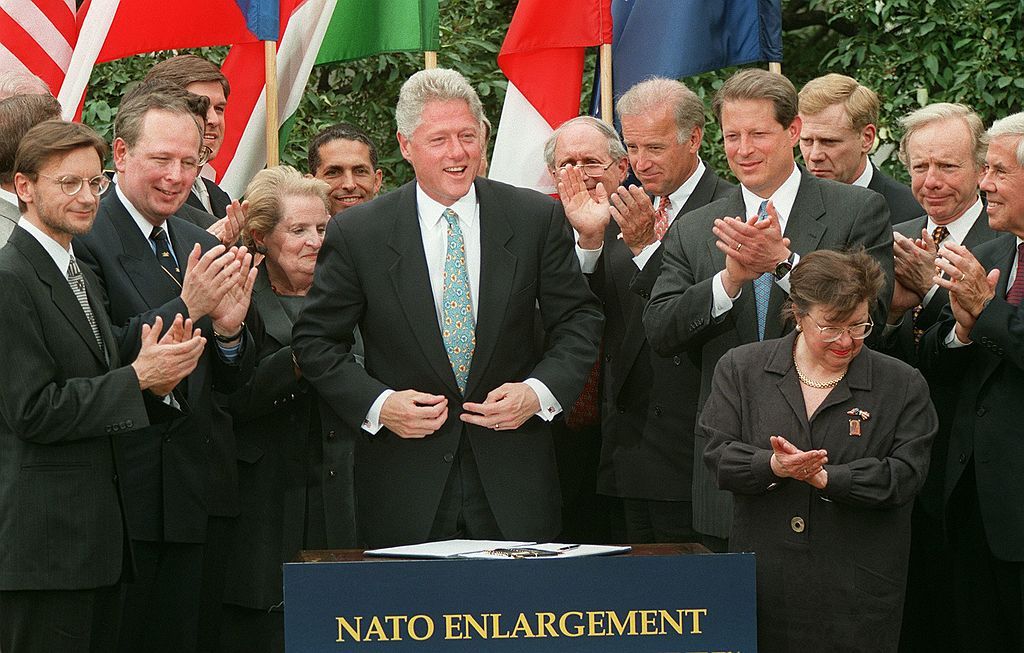
NATO enlargement was a profound strategic change for the United States in terms of the defense commitment it entailed, the goals at which it aimed, and the implications for relations with Russia. As the leading military power in the alliance, the United States effectively assumed a commitment to defend each new state that joined. Enlargement thus expanded the U.S. defense perimeter in Europe and entrenched U.S. leadership of the alliance. Moreover, the enlargement of NATO was part of the enlargement of America’s core global objectives after the Cold War. Having previously sought the negative goal of containing Soviet power, the United States now adopted the positive goal of spreading its model of liberal market democracy. Accordingly, to promote Central and Eastern Europe’s transition from Communism, the Clinton administration made admission into NATO dependent on political criteria. Finally, by choosing enlargement over Moscow’s objections, the United States effectively prioritized relations with new and aspiring NATO members over relations with Russia.
Why did the United States, in the relatively benign security environment of 1990s Europe, opt to enlarge an alliance previously designed to deter or defeat the Red Army?
The first rationale was that enlarging NATO would enable the United States to remain the preeminent military power in Europe on a permanent basis.183 To U.S. officials, the lesson of two world wars and the Cold War was that U.S. military strength abroad was essential to peace and prosperity, the alternative being unacceptable “isolationism.”184 NATO was the obvious vehicle to keep America in Europe and on top. But American policymakers worried that the alliance—and perhaps U.S. global engagement more broadly—would not survive if it remained “frozen in the past,” as Clinton put it in 1995.185 NATO needed a compelling new purpose. As national security advisor Anthony Lake warned, “Unless NATO is willing over time to assume a broader role, then it will lose public support and all our nations will lose a vital bond of transatlantic and European security.”186
In 1993, Lake announced that the “enlargement of the world’s free community of market democracies” would supplant Cold War containment as the organizing principle of U.S. foreign policy.187 The enlargement of NATO became the institutional embodiment of this doctrine. It would allow the United States to “remain permanently engaged in helping to preserve the security of Europe,” as deputy secretary of state Strobe Talbott wrote in 1995.188 If NATO had been created to contain the threat of Soviet aggression, NATO would enlarge in order to contain the threat of American withdrawal.
If NATO had been created to contain the threat of Soviet aggression, NATO would enlarge in order to contain the threat of American withdrawal.
The second rationale for NATO enlargement was to promote democracy within and stability across the post-Communist states in Europe. Policymakers sympathized with these countries and wished to support dissidents-turned-presidents such as Václav Havel of the Czech Republic and Lech Wałęsa of Poland, who called for their countries to be admitted into NATO. In order to entrench transitions to liberal democracy and prevent Communists from making a comeback, NATO in 1995 developed criteria for membership that included a democratic political system, a market economy, and civilian control of the military.189 These criteria would act as a one-time incentive to encourage reforms. Although the Partnership for Peace program had also promoted professional and civilian-controlled militaries, it automatically comprised all European states and therefore could not use the prospect of membership as leverage. NATO’s leverage on reforms was further enhanced because membership in the alliance was widely seen as a precursor to EU membership.
U.S. officials also believed spreading democracy would ensure peace, in line with the democratic peace theory that was ascendant in intellectual and policy circles at the time.190 Thus enlargement would promote stability in Europe, at a time when the ethno-nationalist conflicts in the former Yugoslavia demonstrated that the region could suffer wider destabilization. Policymakers worried that these nations, if left perpetually in limbo between East and West, might one day return to their warring, nationalist past, which had helped to spark two world wars. In Clinton’s phrasing, “The threat to us now is not of advancing armies so much as of creeping instability.”191 Just the prospect of joining NATO, Talbott wrote, could “foster among the nations of Central Europe and the former Soviet Union a greater willingness to resolve disputes peacefully and contribute to peace-keeping operations.”192
The third rationale was obliquely articulated and not universally shared: to deter Russia. Taking advantage of Moscow’s weakness after the breakup of the Soviet Union, NATO enlargement would put the West in the most advantageous position from which to contain Russian power if and when it recovered. For this purpose, bringing Central and Eastern European countries under NATO’s Article 5 security guarantee had greater value than involving them in the Partnership for Peace. Only the former would deter a revived Russia from attacking these countries, which the allied nations would be committed to defend.
The administration did not wish to accentuate this rationale. As a 1994 NSC memorandum advised, the “‘insurance policy’/‘strategic hedge’ rationale (i.e. neo-containment of Russia) will be kept in the background only, rarely articulated.”193 To trumpet it would have offended Moscow at a time of high-stakes U.S.-Russian cooperation.194 In addition, emphasizing the Russian threat risked exposing a contradiction among the rationales for enlargement. On the one hand, NATO presented itself as a political club open to any European state that satisfied objective membership criteria. Conceived as such, an enlarged NATO was not aimed at Russia and did not divide Europe. On the other hand, NATO remained a military alliance. Insofar as it took in new members because Russia might threaten them, the point was precisely to draw a dividing line in Europe, one that could continually move east to lock in new gains.
Finally, in the context of a security environment dominated by the United States, enlarging NATO seemed mostly cost-free. Any potential conflict with Russia would occur many years if not decades in the future. Experts debated the costs of enlargement, but only a minority of critics warned that the strategic consequences would be steep.
Formidable domestic and international actors stood in the way of expanding the U.S.-led alliance to additional countries in the absence of the Soviet threat. Their ranks included Pentagon officials and Russia-focused diplomats, a contingent of academics and intellectuals, and Russia’s leadership.
Enlargement encountered significant opposition in the U.S. government bureaucracy, particularly among leaders in the Department of Defense and Russia experts in the State Department and NSC. Before it became clear that Clinton planned to expand NATO, civilian and military leaders in the Pentagon argued that it was unwise to admit new members for the foreseeable future. They worried that enlargement would damage relations with Russia and were wary of creating new obligations to defend Central and Eastern European countries, in part because bringing in new members could jeopardize alliance cohesion. The administration’s first two defense secretaries, Les Aspin and William Perry, opposed enlargement, as did General John Shalikashvili, who was chairman of the Joint Chiefs of Staff from 1993 to 1997 and had worked with other Pentagon officials to devise the Partnership for Peace.195
Some diplomats also opposed enlargement for fear of impeding Russia’s democratic reforms and its cooperation with the United States. Officials who prized strong relations with Moscow were averse to enlargement, whereas officials responsible for the rest of Europe tended to be supportive. As James Goldgeier writes, “Those who viewed the U.S.-Russian relationship as the single most important objective, far outranking other U.S. priorities in the region, either flatly opposed expansion or believed it could only be considered well down the road.”196 In 1993, Talbott, the State Department’s most influential Russia expert, argued in favor of the Partnership for Peace and against any rapid timeline for potential enlargement. He had the support of Thomas Pickering, the ambassador to Russia, and other Russia and Eurasia hands. Talbott later became a key advocate of enlargement, but even then he still attempted to minimize the damage to relations with Russia.197
In addition, many academics and intellectuals opposed enlargement as a strategic error. Historian John Lewis Gaddis observed in 1998: “I can recall no other moment in my own experience as a practicing historian at which there was less support, within the community of historians, for an announced policy position.”198 The New York Times editorial page urged NATO not to expand, as did the paper’s foreign affairs columnist, Thomas Friedman.199 And although most former government officials supported enlargement, the ranks of the opposition included such luminaries such as George Kennan, Democratic senator Sam Nunn, and former national security adviser Brent Scowcroft.200
Finally, Russia strongly opposed the enlargement of NATO. Although Russian president Boris Yeltsin eventually acquiesced in the first round that concluded in 1999, much as Soviet president Mikhail Gorbachev had acquiesced in reunified Germany joining NATO, policy elites in Moscow saw the alliance as a threat to Russia and viewed its eastward extension as detrimental to Russia’s interests and security. For example, Yeltsin warned publicly in 1995 that the growth of NATO toward Russia’s borders “will mean a conflagration of war throughout all Europe.” If former Warsaw Pact countries joined NATO, he said, “we will immediately establish constructive ties with all ex-Soviet republics and form a bloc.”201 The Kremlin also believed it had received assurances from U.S. officials in 1990 that the alliance would not expand east of Germany.202 Russia’s fears were exacerbated by NATO interventions in the Balkans, which targeted Russia’s fellow Slavs and involved NATO’s first out-of-area military operations.
There was only modest support for NATO enlargement in the United States before the Clinton administration decided to embark on this policy in 1994. It was not a demand of the general public, and there was no well-organized elite campaign to bring it about. Still, enlargement had influential supporters, and acceptance grew once the administration backed the goal of expanding NATO.
It was not a demand of the general public, and there was no well-organized elite campaign to bring it about. Still, enlargement had influential supporters, and acceptance grew once the administration backed the goal of expanding NATO.
Many leaders in the countries of the former Warsaw Pact and Soviet Union were outspoken in their desire to join NATO.203 In 1991, Czechoslovakia, Hungary, and Poland formed the Visegrad Group in part to seek inclusion in NATO. Having led their countries out of Communism, Havel and Wałęsa inspired sympathy across Washington, and they made a favorable impression on Clinton when they told him in person in 1993 of their wish to join NATO.204 Once the president supported enlargement, the Czech, Hungarian, and Polish ambassadors, in coordination with the White House, traveled across the United States to campaign for Senate ratification of the amended North Atlantic Treaty.205
Certain administration officials urged enlargement strongly and early on. These included Clinton, Lake, and Richard Holbrooke, the assistant secretary of state for European affairs. High-profile former officials associated with both political parties—including James Baker, Zbigniew Brzezinski, and Henry Kissinger—were also staunch and vocal backers.206 While members of Congress did not clamor to enlarge NATO in the years preceding 1994, Congress was consistently favorable toward enlargement. House Republicans included a provision to expand NATO in their Contract With America, the platform with which they swept into the majority in 1994.207
Americans of Central European descent were intense advocates of the policy. Even though they appeared to support enlargement in the same proportion as the general population, they pushed hard for it. The Polish American Congress and similar organizations mobilized around the issue. The administration valued the support of these ethnic communities that formed a swing constituency concentrated in electorally important states in the upper Midwest.208 In order to reap political benefits from enlargement, Clinton announced during his 1996 reelection campaign that NATO would be expanded in the near future.209
Defense firms also liked the plan, which promised to open potentially lucrative new markets for their products. Lockheed Martin pitched its F-16s to officials in the Czech Republic, Hungary, and Poland in 1996. The company’s vice president, Bruce Jackson, chaired the U.S. Committee to Expand NATO, which hosted events for members of Congress that featured a range of former policymakers.210
To realize their agenda, the initially modest number of enlargement supporters cleared three main hurdles: getting the White House on board, minimizing obstruction from Russia, and convincing the Senate to ratify the amended North Atlantic Treaty.
Proponents of enlargement in the executive branch did not outargue their opponents through the interagency process; they went around them instead. In 1993, the administration landed on the Partnership for Peace as a compromise position that would forestall NATO enlargement in the near term but keep the possibility alive later. Lake, Holbrooke, and their allies proceeded to whittle away at that compromise by directing NSC staff to prepare proposals for going ahead with enlargement and by inserting lines favorable to enlargement into the speeches of Clinton and vice president Al Gore. In 1994, Clinton made several expressions of support for the idea of expanding NATO, which technically comported with the Partnership for Peace but gave succor to those seeking near-term enlargement.211 Holbrooke seized upon these statements to instruct the bureaucracy to implement the new policy.212 By the end of 1994, Pentagon leaders perceived that the president was committed to enlargement, and the NSC prepared plans to bring new countries into NATO within the rapid time frame that had been rejected the previous year.213
To realize their agenda, the initially modest number of enlargement supporters cleared three main hurdles: getting the White House on board, minimizing obstruction from Russia, and convincing the Senate to ratify the amended North Atlantic Treaty. Proponents of enlargement in the executive branch did not outargue their opponents through the interagency process; they went around them instead.
Once the White House got fully behind enlargement, the largest potential obstacle lay in the Kremlin. Had Russia’s leadership chosen to condition constructive relations with the West on the abandonment of NATO enlargement, this stance might have dissuaded Clinton or the Senate from pressing ahead. The champions of enlargement in the administration therefore went to great lengths to minimize immediate damage to U.S.-Russian relations. Talbott, who had become deputy secretary of state, implemented a two-track approach of expanding NATO and mollifying Russia that culminated in the NATO-Russia Founding Act of 1997.214 The White House supported Yeltsin’s reelection campaign in 1996 not only by furnishing Russia with well-timed financial assistance but also by waiting until afterward to announce that NATO would expand.215 Moreover, the United States and NATO held out the possibility that a democratic Russia might one day join the alliance.216 These measures did not convince the Russian government to support enlargement, but they did get Yeltsin to agree to disagree. That sufficed. Obtaining Russia’s acquiescence enabled the administration to diminish (or defer) the downsides of its policy, thereby limiting opposition in the Senate.
The White House also overcame opposition by devising a particular method for bringing countries into NATO. To maximize its chance of success with the first round of enlargement, the administration developed an approach summarized by the phrases “small is beautiful” and “robust open door,” in the words of Ronald Asmus, who, as deputy assistant secretary of state for European affairs, was tasked with implementing the policy.217 NATO would admit a few states at first while making clear that more numerous and more contentious candidates, like the Baltic states, would receive serious consideration in the future. As a result, skeptics of enlargement in the Senate were initially confronted with the applications of three countries, the Czech Republic, Hungary, and Poland, that aroused particular sympathy. Those who favored more rapid and extensive enlargement, meanwhile, supported the first round as a stepping stone to that outcome, whereas they might have opposed a one-time instance of enlargement if it had meant leaving many Eastern European countries out of NATO for the foreseeable future. When the Senate ratified the first round of enlargement by a vote of 80 to 19 in 1998, “approval was virtually assured before the debate even started,” the Washington Post wrote.218
The case of NATO enlargement shows how a cadre of determined policymakers can catalyze strategic change, vaulting a marginal issue to the top of the agenda and thwarting internal and external opposition. High-level proponents made a two-step move to circumvent the interagency process: they got the president and vice president to publicly endorse their ideas, and then they used that endorsement to push the policy through the bureaucracy.
High-level proponents made a two-step move to circumvent the interagency process: they got the president and vice president to publicly endorse their ideas, and then they used that endorsement to push the policy through the bureaucracy.
Enlargement also became a reality because it had support from organized segments of the public and resonated with the country’s ideological disposition toward global leadership. Opponents of enlargement lacked those advantages. They faced an additional disadvantage: their argument hinged on the potential for negative long-term ramifications, which could be left to another president and perhaps another generation. In that sense, the case of enlargement may illustrate both the possibility and the limits of America’s capacity for strategic change.
In a security environment dominated by the United States, the Clinton administration succeeded in enlarging NATO by making the policy seem mostly cost-free. Experts debated the costs, but only a minority of critics warned that the strategic consequences would be serious.219 For most analysts, a potential military conflict would occur far in the future, when the Russian economy might recover and NATO might expand to countries closer and of greater interest to Russia. By extending alliance membership only to three countries while signaling that further rounds would be forthcoming, the Clinton administration frontloaded the benefits and backloaded the costs.
By extending alliance membership only to three countries while signaling that further rounds would be forthcoming, the Clinton administration frontloaded the benefits and backloaded the costs.
In particular, by starting small and promising to admit more countries into NATO based on political criteria, the administration turned enlargement into an open-ended process that became difficult to limit or stop. NATO has to date grown from sixteen to thirty-one members since the Soviet collapse, and its door remains open. The few Central and Eastern European countries that remained outside were left in a narrowing buffer zone between the West and Russia. This predicament encouraged more countries to try to join the alliance. Georgia and Ukraine mounted membership bids even though many members clearly did not want to admit them. Russia fought a war with Georgia in 2008 and invaded Ukraine in 2014 and 2022 in part to foreclose the possibility that they might one day enter NATO. The “open door” policy in the 1990s that was meant to smooth over differences with Russia later made relations worse, once it became obvious that Russia would not join NATO yet countries whose alignment Russia deemed vital to its interests would.
Moreover, by emphasizing political rather than military rationales for enlargement and by deferring the most problematic candidates to subsequent rounds, policymakers in effect opted to achieve rapid policy change rather than to gain clarity as to how far future American leaders or the public might truly wish to go to uphold Article 5 if a newly admitted NATO member were attacked. Following the first round of enlargement, the Senate gave less scrutiny to other candidates for membership, even though many of them were less militarily capable and defensible than the original three. This was as the Clinton administration intended. But as a result, the credibility of U.S. defense commitments under NATO is perhaps more uncertain today than if advocates of enlargement had conducted a stark, up-front debate over the costs and risks of extending the U.S. security umbrella to a large number of countries.
Senior Fellow and Director, American Statecraft Program
Christopher S. Chivvis is the director of the American Statecraft Program at the Carnegie Endowment for International Peace.
Former Senior Fellow, American Statecraft Program
Jennifer Kavanagh was a senior fellow in the American Statecraft Program at the Carnegie Endowment for International Peace.
Sahil Lauji
Former James C. Gaither Junior Fellow, American Statecraft Program
Sahil Lauji was a James C. Gaither Junior Fellow in the Carnegie American Statecraft Program.
Adele Malle
Former James C. Gaither Junior Fellow, American Statecraft Program
Adele Malle was a James C. Gaither Junior Fellow in the Carnegie American Statecraft Program.
Samuel Orloff
Former James C. Gaither Junior Fellow, American Statecraft Program
Samuel Orloff is a James C. Gaither Junior Fellow in the Carnegie American Statecraft Program.
Senior Fellow, American Statecraft Program
Stephen Wertheim is a senior fellow in the American Statecraft Program at the Carnegie Endowment for International Peace.
Reid Wilcox
Former Research Analyst
After the 9/11 attacks, the George W. Bush administration embarked on an open-ended Global War on Terror (GWOT), which embraced the idea of preventive war, led to the invasion of Iraq, and lowered the priority given China and Russia. This was a major shift in U.S. strategy and a sharp turn away from a traditional state-centered approach to the world to a focus on nonstate actors. Other world powers would be judged by how closely they lined up with the United States on its new top priority: counterterrorism.
The new strategy involved not only an increase in the resources for military operations but also a major shift in the allocation of resources across the tools of national security. New covert operations, including to cooperate with foreign intelligence services and to engage in lethal force against terrorists abroad, were introduced. There was a significant refocusing of the priorities of the CIA, increase in its budgets, and growth of a set of unique capabilities for special operations.220 The Joint Special Operations Command exploded from a force of 2,000 to an estimated 25,000 troops deployed in seventy-five countries at the height of the GWOT.221 Diplomatic and military institutions were transformed for nation-building operations.222 Reliance on private military contractors during the GWOT grew nearly a hundredfold measured against Gulf War–era staffing ratios.223
The administration also undertook the largest reorganization of the federal government since the Second World War, bringing together twenty-two agencies and offices under the auspices of the new Department of Homeland Security.224 The Office of the Director of National Intelligence (DNI) was created to oversee intelligence sharing across the government and serve as the principal adviser to the president on intelligence matters, and within it was the National Counterterrorism Center.225 The Departments of State and Treasury, as well as the Federal Bureau of Investigation (FBI), experienced important changes and a refocusing on the task of fighting terrorism globally.226
The Bush administration deliberately used the opening created by 9/11 to implement not only a strategy that aimed at countering terrorism but also a broad vision of America’s role in the world that they had been developing for years.
The post-9/11 transformation of U.S. strategy illustrates how a major crisis can open the door to far-reaching change. But that change was not inevitable nor predetermined by the terrorist attacks on American soil or the nature of the crisis. The Bush administration deliberately used the opening created by 9/11 to implement not only a strategy that aimed at countering terrorism but also a broad vision of America’s role in the world that they had been developing for years.
At the most basic level, the rationale for the GWOT was self-evident. America had been attacked by al-Qaeda and would avenge the attack and eliminate the threat. This transnational terrorist group would be defeated as if it were a traditional state. To prevent further attacks, the United States would also eliminate other Salafi-jihadist terrorist groups and those who supported them around the world. The GWOT thus became an open-ended campaign against terrorists and their sponsors. Bush said it would “not end until every terrorist group . . . has been found, stopped, and defeated.” 227
The Bush administration might have opted for either a more limited strategy that involved disabling al-Qaeda only, eschewing eliminating terrorism in general, or one that focused more on homeland defense than global counterterrorism. Some reorientation of strategy to deal with the terrorist threat was inevitable, but the war in Iraq was not. The administration took advantage of the crisis to overthrow Iraqi president and dictator Saddam Hussein, who had no link to al-Qaeda. The motives for this move have been much debated, but they certainly involved U.S. fears about his possible weapons of mass destruction (WMDs) and the fact that he had been a thorn in the side of the United States since the Gulf War.
The GWOT focused on the denial of safe havens to terrorists to prevent future attacks, preventive action and regime change to hamper the potential threat of “rogue states” and terrorists seeking WMDs, and democracy promotion and nation-building to counter the roots of terrorism. The pursuit of these ends required restructuring national security institutions; not only did the military, intelligence community, Department of Defense, and State Department reformulate in some way, but also, the Treasury and other agencies expanded beyond their traditional roles to support counterterrorism operations, stabilization of crisis areas, and postconflict reconstruction efforts.228
The secretary of defense Donald Rumsfeld urged that the United States needed to think more broadly than a war against al-Qaeda and removing the Taliban regime in Afghanistan; it needed to consider other countries that provided safe havens, funding, and support to terrorist activities.229 In order to successfully protect Americans, he argued, Washington needed to impede “others from thinking that terrorism against the United States could advance their cause.”230 Vice president Dick Cheney said that the administration’s policy would be to administer “the full wrath of the United States” upon nations providing sanctuary and support for terrorists.231 The elimination of terrorist safe havens would go beyond physical territory to include legal, cyber, and financial systems that allowed terrorists to operate and prosper.232
With the U.S. military’s unrivaled superiority, Bush and his advisers believed that what they saw as Cold War risk aversion needed to be replaced by a more aggressive approach to other transnational problems too.233 The proliferation of WMDs was just behind terrorism at the top of their list. They thus sought to aggressively counter and engage in regime change against rogue states that might possess or acquire WMDs, on the grounds that such states might not just use them but also give them to terrorists.234 While a rogue state or terrorist group could not defeat America on the battlefield, the Bush administration and others feared that it might launch a WMD against the United States, killing thousands or even millions of Americans.235
The new strategy was rooted in views that the president and his advisers had developed over the course of the previous three decades. They were heavily focused on restoring American military power after what they believed was an ignominious defeat in Vietnam.236 Many Bush advisers had been, in the 1970s and 1980s, proponents of a more substantive effort to confront the Soviet Union.237 Paul Wolfowitz and Lewis Libby, who served at high levels in the Defense Department during the administration, had authored the 1992 Defense Planning Guidance, which argued that containment and deterrence had become antiquated with the end of the Cold War and that the United States would need to prevent the re-emergence of a new rival superpower, safeguard U.S. interests (such as access to Persian Gulf oil), promote American values, and be prepared to act unilaterally when necessary.238 The document had been leaked and ultimately shelved due to public controversy, but when Wolfowitz and Libby returned to government, they found an opportunity to implement their neoconservative plan after 9/11. Bush’s 2002 State of the Union address thus stated that the administration aimed to go beyond Afghanistan and combat an “axis of evil”—Iran, Iraq, and North Korea—that was seeking to make WMDs and might supply them to terrorists. This provided a broad framework for the United States to pursue regime change in Iraq and other nations. 239
As part of this, the administration also sought to spread democracy through new coercive means, including military-backed nation-building operations, on the grounds that nondemocratic governance was an underlying cause of terrorism. It aimed to shape “the future security environment” of the Middle East through a broad sociopolitical transformation.240 The Bush Doctrine stated that the only sustainable model for a country’s success was heralding “freedom, democracy, and free enterprise” and that promoting these would work together with America’s military might.241 Ultimately, the administration aimed to win the “battle of ideas” by advancing its version of freedom and human dignity through democracy promotion to defeat terrorism in the long term.242 This aspiration would run headlong into the pursuit of its counterterrorism aims, which often relied on cooperation with autocrats, but it was part of a fairly coherent overall strategic vision, one that was largely implemented after 9/11.
The shock of 9/11 helped ensure that there would only be limited opposition to the reforms, but there was a good deal of bureaucratic wrangling over what the particular aspects of these reforms needed to look like. For example, the U.S. Army was reluctant to accept the force reductions that Rumsfeld proposed in his effort to modernize defense capabilities for unconventional war, which went against its vision of its role as one of conducting large-scale ground combat operations of the kind conducted in the Second World War and for which it had prepared during the Cold War.243 There were also turf wars within the intelligence community, especially between the CIA and the newly created director of national intelligence (DNI). The DNI’s remit as the president’s main intelligence adviser and head of the entire U.S. intelligence community intruded on the long-established roles of the CIA, whose director and others in the agency felt that it had been unfairly judged by the 9/11 Commission and punished by subsequent legislation, which downgraded the CIA when it created the DNI.244 Rumsfeld also sought to weaken the DNI in an effort to protect the Pentagon’s authority, while the FBI pushed back against the DNI’s power over its national security functions.245 In the end, however, although these bureaucratic frictions hampered the intended function of the reforms, they did not derail the broader effort to implement a strategic shift in foreign policy.
Some of the measures the administration implemented also ran into legal challenges, including from the Department of Justice’s legal counsel, which in 2004 argued that the National Security Agency’s Stellarwind surveillance program had gone beyond the scope of the president’s authority and violated federal statutes protecting Americans from governmental infringements.246 When Bush sidestepped the department by reauthorizing the program, some of its top officials threatened a mass resignation, which ultimately led to the president accepting a more limited scope for the program.247
There was also bureaucratic resistance to the adoption of nation building as a major national security activity. For example, the creation of the State Department’s special representative for conflict, stabilization, and reconstruction lacked significant support from the secretary of state or a congressional constituency to advocate for it, and it was ultimately sidelined in Afghanistan and Iraq, by far the two most important nation-building operations of the era.248
Many foreign actors opposed Bush’s new strategic vision, especially as it grew in scope and scale. Pakistan, for example, often undermined American efforts during the war in Afghanistan by continuing its financial and logistical support for the Taliban.249 U.S. house raids and civilian killings led Afghanistan’s president Hamid Karzai to repeatedly demand a shift in the administration’s terrorism strategy.250 Türkiye refused permission for U.S. forces to use its territory to invade northern Iraq, which necessitated troublesome aerial deployments instead.251 Russia and several NATO members, such as Canada, France, and Germany, opposed the Iraq invasion and argued instead for weapon inspections and diplomatic solutions.252 As the United States took a unilateral approach after failing to obtain a UN Security Council resolution justifying the invasion, UN secretary general Kofi Annan warned Washington and its allies that their actions would violate the UN Charter and later stated the invasion was illegal.253
Finally, there was opposition from domestic and foreign publics to the strategic change. Human and civil rights organizations, for example, filed lawsuits against the administration’s torture tactics and infringements on the liberties of American Muslim communities.254 Domestic and international public criticism of these changes also increased over the course of the Bush presidency.
The Bush administration relatively easily overcame the limited resistance to its attempt to reorient U.S. foreign policy. Neoconservatives and hawks in the administration drove the change, but it also had broad support inside the national security bureaucracy and Congress, as well as from other governments. Supportive officials in the defense, intelligence, development, and diplomatic institutions worked to reorient their workplaces toward combatting terrorism. And the shock of 9/11 helped to ensure that Bush could overcome any resistance.
Despite some pushback from the Democrats, especially in the case of the Iraq War, the GWOT had bipartisan support in Congress due to a consensus on holding the 9/11 perpetrators to account and preventing another attack on the homeland. Congress passed two authorizations in 2001 and 2002 for the use of military force to support the change in strategy. It also passed key intelligence and national security reform legislation—including the Patriot Act, the Homeland Security Act, and the Intelligence Reform and Terrorism Prevention Act. And it increased and reoriented national security budgets toward fighting terrorism globally. Congressional appropriations for Overseas Contingency Operations and GWOT-related activities totaled $803.5 billion from 2001 to 2008 (or $100.4 billion annually on average).255 In 2008, counterterrorism spending reached a zenith of $260 billion, or 22 percent of the total federal discretionary budget.256
The public also largely supported the GWOT. Weeks after 9/11, 71 percent of Americans indicated that they supported a broader war against terrorist groups and the nations that aided them, rather than limiting military retribution for the terrorists responsible for the attacks.257 In polls, 90 percent regularly expressed approval of military action in Afghanistan, and 72 percent supported the invasion of Iraq in 2003.258 There was also broad approval for the restructuring of the government to facilitate counterterrorism efforts, with, for example, 69 percent of Americans approving of Bush’s proposal to create the new Department of Homeland Security.259
The United States also had extensive support from other countries for its new strategy, including close allies like the United Kingdom and also the likes of Russia.260 Foreign intelligence services collaborated with the United States to provide local expertise on terrorists’ activities. Over eighty countries allowed the United States to conduct covert operations against al-Qaeda and its proxies on their soil, with many aiding in such efforts.261 A diverse, global coalition backed the United States through military campaigns, intelligence and law enforcement collaboration, and the freezing of terrorist assets.262
The changes made by the Bush administration drew on preexisting drivers in U.S. foreign and security policy, notably the strength of the military and post–Cold War globalism, but they amounted nevertheless to a major strategic reorientation. In invading Iraq, Bush and his advisers began an era in which the United States renounced the lessons of the Vietnam War, going much further than at any time since the Second World War to use military force to remake the world according to U.S. preferences. The United States embarked on large-scale nation building and counterterrorism, widely altered its spending, and made far-reaching institutional reforms that largely remain in place twenty years later. Later presidents Obama and Trump sought to steer America away from the course on which Bush set it, but they found it difficult given the consistent plotting of overseas terrorist groups and the extent to which Bush’s strategy was institutionalized in the government bureaucracy and the foreign policy community. It took two decades and a major internal fight for Biden to bring U.S. operations in Afghanistan to a close. Many other elements of the Bush administration’s strategy are likely to remain for decades to come.
Crises create windows for domestic and international consensus and for strategic change.
The case of the Bush administration clearly highlights how crises create windows for domestic and international consensus and for strategic change. After 9/11, the desire to hold the terrorists accountable and to prevent another assault on American soil was unanimous. Bush used this window to elevate counterterrorism, preventive war, and a global, militarized U.S. role, and he faced little immediate pushback. Some change in foreign policy was almost a certainty after the attacks, but the specifics, scope, and scale of the change were determined by the president and his team.
Senior Fellow and Director, American Statecraft Program
Christopher S. Chivvis is the director of the American Statecraft Program at the Carnegie Endowment for International Peace.
Former Senior Fellow, American Statecraft Program
Jennifer Kavanagh was a senior fellow in the American Statecraft Program at the Carnegie Endowment for International Peace.
Sahil Lauji
Former James C. Gaither Junior Fellow, American Statecraft Program
Sahil Lauji was a James C. Gaither Junior Fellow in the Carnegie American Statecraft Program.
Adele Malle
Former James C. Gaither Junior Fellow, American Statecraft Program
Adele Malle was a James C. Gaither Junior Fellow in the Carnegie American Statecraft Program.
Samuel Orloff
Former James C. Gaither Junior Fellow, American Statecraft Program
Samuel Orloff is a James C. Gaither Junior Fellow in the Carnegie American Statecraft Program.
Senior Fellow, American Statecraft Program
Stephen Wertheim is a senior fellow in the American Statecraft Program at the Carnegie Endowment for International Peace.
Reid Wilcox
Former Research Analyst
The case studies presented in this report demonstrate that making major strategic change in U.S. foreign policy involves not just the White House but also the government bureaucracy, Congress, the wider expert community, the public, and foreign actors. Proponents of change need to account for all these actors to some degree in order to be successful.
This chapter draws conclusions from the case studies and adds insights from other cases and relevant scholarly literature. It identifies practical lessons for future U.S. leaders and policymakers who seek to bring about major change in foreign policy.
The chapter begins by explaining why crisis facilitates change and by exploring the implications of this finding. It then examines why various parts of the government bureaucracy tend to resist major changes, as they did in nearly every case. The chapter proposes three ways to encourage the bureaucracy to adopt change more willingly. Next, the chapter explains why Congress matters for strategic change, identifying the political conditions under which it is likely to support rather than resist change. The following sections examine the role of public opinion and the psychology of change, which suggest ways to convince the many stakeholders involved in foreign policy that change is needed. The chapter concludes by considering the limits of presidential power in making major changes in America’s role in the world, arguing that an incremental and reformist approach is likely to be most effective.
The case studies show that crisis is a great driver and facilitator of change and that foreign policy leaders should have an idea of how they might use a crisis to open or foreclose opportunities to shift strategy. The case of 9/11 makes the importance of crises unmistakably clear, but international crises spurred change in the NSC-68 and Vietnam War cases as well. There is truth in the adage “Never let a good crisis go to waste.” Crises generate policy plasticity, opening the door to strategic change. Absent a crisis, a president seeking significant changes in foreign policy faces a much harder task.
Consider the impact of the outbreak of the Korean War on U.S. Cold War strategy. The hawkish global approach that Nitze developed in NSC-68 initially faced opposition inside and outside the government. The plan was basically shelved in the spring of 1950, and it gained new life only when the Korean War erupted in June. North Korea’s invasion of South Korea seemed to support NSC-68’s central claim that the United States could not afford to focus solely on competition with the Soviet Union in Europe. The outbreak of the war also created a sense of urgency that NSC-68’s advocates used to turn their strategy into a reality. As a result, the United States adopted a more geographically expansive and military-centered conception of how to wage the Cold War.
The 9/11 attacks provide an even more clear-cut case of how a foreign policy crisis fosters major change. The terrorist attacks created so strong a national desire to punish al-Qaeda and to prevent another assault on American soil as to give the Bush administration as close to a free hand in foreign policy as any presidency since the Second World War. The White House used the crisis not just to put a higher priority on counterterrorism but also to increase defense spending and implement a neoconservative grand strategy aimed at building democracy in the Middle East through military force.
Conversely, Carter’s failed attempt to withdraw U.S. forces from South Korea illustrates the difficulty of achieving significant change without a crisis to motivate and galvanize support for it. Carter came into office on the heels of economic and foreign policy crises: the 1973 inflation spike and the Vietnam War. The latter was one reason he wanted to reduce the U.S. military posture in Asia by withdrawing forces from South Korea. By the time he took office, however, these problems had lost intensity. Support for withdrawal from South Korea dissipated over time, and Carter was eventually forced to shelve the idea.
Crisis is not always necessary for major change. The Biden administration withdrew from Afghanistan in 2021 in the absence of a foreign policy crisis. It decided to withdraw U.S. forces in the first year of the administration, during a honeymoon period when the president still enjoyed strong support from his own party and control of Congress. The policy had also been pursued by Trump, making it more difficult for Republicans in Congress to criticize the withdrawal harshly. By 2021, moreover, evidence that the United States was not achieving its stated objectives in Afghanistan had piled up over the years, weakening resistance to change and making withdrawal popular among a large majority of the American public.
Why do crises facilitate change? One reason is that they tend to generate an emotional impetus for action, making people more likely to rethink their fundamental assumptions and goals. In a time of crisis, the public, Congress, and the government bureaucracy yearn for a response. Pressure for action is not always a good thing, because sometimes the best policy is to avoid taking action in the first place—in other words, to do nothing—but if the White House is aiming for a major change, a crisis generates a permissive atmosphere for change to gain traction.
Crises can also overwhelm existing beliefs with disconfirming information. In normal times, people tend to interpret facts according to existing mental frameworks rather than to revise the frameworks themselves. But a crisis can cause people to rethink assumptions if an existing framework has proven to be inadequate for understanding the world and generated harmful consequences.263 In addition, crises generate a sense of urgency, which can generate the momentum needed to overcome inertia. Experts on change in businesses, for example, have pointed out that a sense of urgency can be essential to large-scale change because it helps generate collective action.264
A crisis does not determine a particular policy response, however, even if it creates the emotional and psychological basis for change. Even shocks like 9/11 or the Korean War were interpreted in different ways and could have produced different policy outcomes. Policy alternatives are always available. For example, in the case of 9/11, the choices to pursue the Global War on Terror and invade Iraq were shaped by American strategic culture, preexisting threat perceptions of Iraq, and other factors.265 During and after a crisis, policymakers will disagree about the causes of the crisis, the potential responses to it, and the relevant high-order goals and interests at stake. Some may see their own interests advanced or set back by the alternatives on offer. Moreover, when a crisis has triggered strategic change, that change has often been conceived and proposed prior to the crisis. Rather than emerging from the objective properties of a crisis itself, the “solution”—as in the cases of NSC-68 and the invasion of Iraq—already existed as an idea and then gained acceptance out of a belief that the crisis would have been prevented or been easier to address had the strategic change been adopted earlier.
Still, there was certainly a relationship between foreign policy crises and the strategic changes they have produced. The Korean War helped to strengthen the case for the globe-spanning recommendations of NSC-68 because it was a crisis in Asia, not Europe. The 9/11 attacks resulted in changes aimed at addressing the new threat from terrorist organizations and actors in the Middle East. Any White House would have adopted a greater emphasis on terrorism, even though not all of the policies adopted by the Bush administration were made inevitable by the 9/11 attacks themselves.
Absent major external shocks, strategic change remains very difficult in U.S. foreign policy, where policies are often highly institutionalized and supported by many interests and groups in Congress, the different government bureaucracies, the expert community, and the broader public.
Nor will any foreign policy crisis be enough to generate major change. Absent major external shocks, strategic change remains very difficult in U.S. foreign policy, where policies are often highly institutionalized and supported by many interests and groups in Congress, the different government bureaucracies, the expert community, and the broader public. Moreover, crises may facilitate certain types of change but not others. In most cases since the Second World War, crises generally triggered a strong impulse to “do something,” leading to an expansion of U.S. programs and activities and causing a policy of restraint to receive little hearing. Crises—whether the Korean War, the end of the Cold War, or 9/11—are not normally conducive to disciplined foreign policy.
Most of the cases studies reveal the importance of bureaucratic resistance to change. Sometimes, as when the military and civilian bureaucracies mounted a campaign against Carter’s attempted drawdown in South Korea, resistance succeeded. In other cases, resistance was thwarted, whether by the maneuvers of a small group within the bureaucracy, by secrecy in the White House, or by congressional and public pressure.
The different government bureaucracies are essential instruments through which power must flow when presidents employ political, diplomatic, intelligence, and other forms of power. Presidents cannot overlook or circumvent them when seeking to introduce foreign policy change.266 There is no diplomacy without the State Department and no military action without the Pentagon. Strong bureaucracies make the United States more powerful and more capable—but they are difficult to change and make change difficult.
Foreign policy bureaucracies are highly complex organizations that enjoy a great degree of independence and maintain deep relationships with Congress and expert communities outside the government. They also have strong internal values, cultures, and perspectives on foreign policy. It is not surprising that they routinely pursue their own interests that transcend administrations and that they resist presidential orders to do things they have not been organized and programmed to do.
Obama, for example, entered the White House promising to close the U.S. detention facility at Guantanamo Bay, but he met staunch pushback from parts of the national security bureaucracy that successfully thwarted his plan.267 Resistance varied across the government, but Obama’s failure is evidence of how bureaucracies are conditioned to preserve the existing way of doing things—in this case to preserve the policy that emerged after the 9/11 attacks. The Trump administration also faced a great deal of bureaucratic pushback on foreign policy.268 Trump tended to portray this obstacle as stemming from a nefarious “deep state” and a civil service dominated by political adversaries.269 Parochial bureaucratic factors were probably more important.270
One reason bureaucracies resist change is fear that it will threaten their interests. The State and Defense Departments tend to resist change when they expect it will impose new requirements on them, constrain their budgets, damage their institutional influence within national security decisionmaking, or alter their basic mission. Bureaucrats may also resist change if they worry it will be costly and cumbersome to implement. Major foreign policy change inevitably requires new bureaucratic procedures and routines. These detract from existing ones that have advocates within the bureaucracy, all of whom will resist change. Organizational culture is another source of resistance: bureaucracies have identities, and civil servants hold beliefs about their organization, its role, and why they do what they do.271 This gives them a sense of mission that drives their work. If the White House tries to implement a policy running counter to the organizational culture that animates a bureaucracy, resistance is almost certain.
Major foreign policy change inevitably requires new bureaucratic procedures and routines.
Moreover, even when tasked to implement a strategy whose goals the bureaucracy largely accepts, officials still have a strong bias in favor of using existing capabilities to do so, even if these capabilities are not well suited to the task. Officials will make the case for the appropriateness of their organization’s existing capabilities because they believe this is their job. They are unlikely to admit, or sometimes even recognize, that new policy objectives require new ways and means.272 For example, the United States’ tendency to turn to the military instrument is in part a reflection of the size of its military capabilities and of the Pentagon relative to other foreign policy actors.
The tendency of bureaucracies to cling to existing procedures and tools to implement new policies—even when inappropriate—is part of a larger principal-agent problem that any White House faces in dealing with agencies such as the State Department, the Pentagon, and the intelligence community. The problem is that the president must delegate implementation to the bureaucracy, which has greater knowledge of and control over outcomes than the president. Because it can be very hard for the principal to monitor implementation, the agent ends up with wide latitude to shape the policy. Once the White House has decided to make a particular change in policy, it can prod, pressure, monitor, and cajole the different bureaucracies to do what it wants, but it cannot be totally sure of how much they will follow through.273 Part of the problem arises from the fact that the expertise needed to implement a change in foreign policy can often be found only within the bureaucracy. Presidents may understand the broad outlines of the foreign policy they seek but almost certainly lack the expertise to understand how to implement it. Paradoxically, the more the White House draws on the expertise of the organizations required for implementation, such as the Defense Department, the more it will import the culture and aims of that organization into the policy, and the less likely change will occur.274
Bureaucracies have several means at their disposal to push back against change they dislike.275 For one, officials may directly defy orders. This stark approach, however, comes with many risks and is not always effective. For example, the many resignations from the State Department during the Trump administration had little effect on White House policy.276 They may even have been welcomed by an administration that wanted to gut the bureaucracy. Alternatively, simply not acting on orders or acting very slowly— “slow rolling”—is a less risky and more effective strategy. For example, the Defense Department repeatedly slow-rolled Trump’s orders to withdraw U.S. forces from Syria, where they remained when he left office.277 The department, which had spent blood and treasure fighting there for years, saw these orders as precipitous and capricious, and so military leaders leveraged their knowledge of operational realities to delay and obstruct what the president wanted.
Bureaucracies can also leak negative information to the press, work with allies in Congress to undermine policy objectives, encourage expert networks outside government to attack the White House, and appeal to special interests to fight against change.278 In the current polarized and sensationalist political environment, there will almost always be an appetite for leaks in the media and a willing and powerful set of interests ready to take advantage to hinder new policy or just score partisan political points.
Bureaucratic resistance to change has led to some experts to warn about the emergence of a “deep state” that thwarts the objectives of democratically elected presidents.279 This charge can be misleading because the government bureaucracy is unlikely ever to act as a united front in opposition to or support of White House objectives.280 Different agencies stand to lose or gain from policy change in different ways, so resistance will vary accordingly. It will vary even within some larger bureaucracies, such as the Department of Defense, or across the multiple agencies that comprise the U.S. intelligence community. A key element of successful management of the bureaucracy will therefore always be the advance identification of where these areas of resistance or advocacy are likely to lie, so that the resistance can be neutralized and the advocates empowered.
When bureaucratic resistance to policy change is soundly rooted in legal statutes, there is little the White House can do to overcome it. Many statutes, though, leave room for interpretation by attorneys in the different bureaucracies themselves or in the Office of Legal Counsel at the Department of Justice. In theory, replacing those who make interpretations contradicting a proposed change would be one way to overcome resistance. But such a gambit would be ethically questionable and likely to face legal challenges. Fortunately, there are other ways to make bureaucracies go along with change.
The first and most important way is through political appointments. All administrations appoint political allies to key positions in the different government bureaucracies, and there are several thousand such appointees in the executive branch overall. They can change the agencies to make them comply better with the president’s agenda rather than their own.281 Political appointees can also help overcome resistance to change by shifting around managers with entrenched views.
There are limitations, however, to the use of political appointments. Although it might seem that appointing a larger number of officials to the bureaucracies will increase the White House’s control over their behavior, it can be difficult to find people who are loyal and ready to embrace change as well as qualified to implement change. Political campaigns attract loyal outside experts but do not ensure their competence as experts and government officials. Those who possess the expertise needed to understand, reform, and reorganize bureaucracies are more likely to hold views similar to those bureaucracies and hence be less suited to implementing changes, even when they are politically loyal to the president. Conversely, appointees who are loyal to the president and share the administration’s desire for change may be less likely to have the specialized knowledge and authority needed to be effective in pressing for bureaucratic change. Some appointees, meanwhile, are chosen for reasons other than their loyalty and competence in the job. Plum ambassadorial appointments, for example, are often a payback for large campaign donors. As a result, at least some political appointees will lack the policy knowledge, management, or persuasion skills required to change the bureaucracies to which they are assigned.
The second method is to empower the NSC staff to drive the change. Some presidents prefer to use the NSC in a coordinating role between the agencies, others as one of the main drivers of policy. A coordinating NSC may encourage continuity rather than change because the different bureaucracies it coordinates are unlikely to produce policies that push far beyond their existing capabilities, interests, and views. Therefore, an NSC empowered to direct foreign policy is often necessary for driving any significant change in direction.
Yet empowering the NSC to do more than coordinate policy poses institutional challenges. NSC staff can intimidate, cajole, and reward their counterparts in the different bureaucracies, but they lack direct authority over them. Deputy assistant secretaries, assistant secretaries, and undersecretaries take their orders from the cabinet officials at the top of their departments, not from the White House. And even skilled and experienced NSC staffers are likely to lack the technical expertise needed to convincingly translate White House aims into specific actions the bureaucracy must undertake. Alternatively, appointing to the NSC people who have the expertise needed to direct the bureaucracies means choosing staff that come from within the bureaucracy and thus share its values and culture to some degree. Empowering the NSC to take an activist role also tends to degrade the capacity of overburdened NSC staff for the strategic analysis needed for sound foreign policy.282
The third solution is to persuade the bureaucracy of the need for change and to dedicate presidential and cabinet attention to the task. Presidents committed to change will have to use their political capital and powers of persuasion. The White House communications staff will be focused on selling any major change to the public and the congressional liaison staff will do the same for Congress, but presidential persuasion must also be directed at the bureaucracy. The White House needs to design an internal campaign aimed at convincing the civil service that the change is needed and nonthreatening, even if the effort cannot be expected to win over all the parts of a change-averse bureaucracy. It should also frame the change in terms of the losses that the status quo creates not only for the nation but also for the specific groups that must carry out the change.283 A sustained effort at communication—by the president and also the vice president, the national security adviser, and the secretaries of defense and state—in the form of speeches, memos, and visits to the departments will pay dividends in bringing about the new foreign policy. Ideally, this effort will identify internal influencers within the bureaucracy who can be won over to change.
Crucially, major foreign policy change will be much easier in periods of fiscal largesse. Fear of losing funding is a central motivator for bureaucracies and a key reason they resist change. When there is enough money to go around and fewer budgetary fights, they are less inclined to fear change and more inclined to embrace it. A corollary is that a change aimed at reducing foreign policy spending will be inherently more difficult to achieve than one that is spending-neutral or increases spending. This is an important conundrum for those who seek to reduce U.S. spending on foreign policy, whether on defense, diplomacy, or foreign aid.
What is more, bureaucracies are likely to change slowly, especially in the absence of a major crisis to spur them on. Pushing them too hard can be counterproductive. The culture of the government bureaucracy is deeply rooted and nearly impossible to overturn within the time frame even of a two-term presidency. The difficulty of changing organizational culture is one reason why experts advise companies against attempting far-reaching changes and instead recommend focusing on altering tasks and processes.284 There are always positive aspects of organizational culture, and holding these strengths up for praise while focusing on eliminating a few problematic aspects will have a higher chance of success.285
Trying to circumvent the government bureaucracy by consolidating decisionmaking in a small group and acting in secrecy, as the Nixon White House did, can easily backfire.
Trying to circumvent the government bureaucracy by consolidating decisionmaking in a small group and acting in secrecy, as the Nixon White House did, can easily backfire. The Trump administration anticipated resistance from the bureaucracy but ended up generating or exacerbating it, sometimes by acting in secrecy and other times by acting too publicly, for example, by announcing policy via Twitter before consulting with the bureaucracies. The president placed tight groups of political appointees at the top of agencies like the State Department and DNI, who then insulated themselves from their organizations. By attempting to circumvent the bulk of the agencies that it needed to implement its foreign policy, the administration tended to increase the likelihood of the bureaucracy to work against it.
Firing bureaucrats in large numbers is also unlikely to work. There is no ready reservoir of competent civil servants to fill relatively low-paying jobs in the bureaucracy, especially if one of the main benefits of these positions—job security—is removed.
Congress is often assumed to be impotent in performing its constitutional duties on foreign policy. By this logic, any effort to bring about strategic change might as well ignore the legislative branch. But this view is a partial truth at best. Discussions of strategy too often ignore Congress’s crucial role in strategic change. Congressional support was an important factor in overcoming bureaucratic objections to NATO enlargement, whereas congressional opposition amplified bureaucratic resistance in the case of Carter’s failed attempt to withdraw forces from South Korea.
Under the Constitution, Congress possesses extensive powers to make foreign policy, including the right to declare war, raise military forces, levy taxes, impose tariffs, appropriate funds, advise and consent on treaties, and confirm high-level appointments in the foreign policy bureaucracy. Yet by the 1970s many lamented the lack of power Congress exerted over the White House on foreign policy. The War Powers Act of 1973 was intended to limit to ninety days the executive’s use of military force without the authorization of the legislative branch, but Congress has yet to invoke it to get a significant ongoing military operation to stop.286 The presidency emerged even more dominant during the George W. Bush administration, when the executive branch claimed sweeping prerogatives and Congress diminished its own influence by swiftly authorizing an open-ended war on terror.287 Congress has still not revoked the war authorizations that it passed in 2001 and 2002.
Recent scholarship, however, sets out ways in which Congress sometimes has more influence on foreign policy than it appears. Legislators can and regularly do exert influence through indirect and direct means.288 When it comes to foreign policy, relations between Congress and the executive better resemble a tug-of-war than a one-way street.289
Congressional power over foreign policy is most limited during a crisis, when the executive branch has the proverbial ball. This is particularly true in the early stages, when the White House has access to more intelligence and information and the ability to deploy forces into the field, thus changing the objective circumstances. At that point, fear of being charged with a lack of patriotism in a crisis encourages many members of Congress to hold back criticism and support the president.290
Congress’s limited power during national security crises may help explain why its influence is sometimes thought to be so low. In a crisis, public attention is at its highest, events are dramatic, the focus is on the White House, and Congress is relegated to the sidelines. As the initial drama fades, however, Congress can become better-informed by holding hearings and examining intelligence. It can also evaluate the results to date of the president’s approach. Congressional leaders may then grow bolder and more willing to stand up to the president.
In recent years, Congress has asserted its influence through other methods besides providing advice and consent on treaties and exercising its constitutional authority to declare war.291 Instead, Congress may affect public opinion when leaders speak for or against specific elements of the administration’s foreign policy, as occurred with increases and decreases in troop levels during the Afghanistan and Iraq wars. Congress may also debate legislation that is critical of the administration’s policy or hold hearings aimed at pressuring the White House to change course.292 One should not exaggerate the impact of congressional hearings or of the statements of congressional leaders, but these actions make a difference by raising public awareness and increasing the political costs for the White House of persisting with an unpopular foreign policy.293
Congress is in some ways more potent when the scale of policy change is large and U.S. ground troops are not in harm’s way. It can use the “power of the purse” and its statutory authority to change the structure of agencies and thus affect their absolute or relative power. For example, Congress could try to deemphasize the role of military force and strengthen diplomacy by increasing the State Department budget. Or it could seek to slow or even halt the growth in the defense budget in an effort to promote rationalization within the Defense Department or reduce its influence, as the Obama administration did with the policy of “sequestration.” Rebalancing spending away from defense and toward diplomacy has of course been hard to do, historically, even when supported by Pentagon leaders, but it is within the power of the legislative branch. When it comes to budgetary supplementals, such as the legislation that has been passed to assist Ukraine, Congress may be able to have a greater influence than in cases where budgets have been in place for many years.
Congress also can affect the policies and capabilities of the agencies by funding new programs within them, or it can even create, dismantle, or rearrange agencies. Congress has sometimes forced such rearrangements on the executive, as the Republican-controlled Congress did in the 1990s when it consolidated the Arms Control and Disarmament Agency and U.S. Information Agency into the State Department.
Although often seen as quiescent after 9/11, Congress was instrumental in designing and passing the legislation that turned counterterrorism into the focus of U.S. foreign policy. As noted, it passed two major authorizations for the use of military force that supported the Bush administration’s change in strategy, as well as key pieces of legislation that reshaped the national security bureaucracy, including the Patriot Act, the Homeland Security Act, and the Intelligence Reform and Terrorism Prevention Act. Congress also used its budgetary power to increase and reorient national security budgets toward the new global war on terrorism.
Congress has the capacity to promote strategic change yet often remains passive or obstructs change. Under what conditions might it choose to support strategic change, and under which conditions might it oppose change?
Congress contains many sources of resistance to change. There are bound to be a variety of different views in the 535-member body, and even within the two parties, but the tendency to support the status quo is usually strong. Human psychology resists change (see later discussion). Members of Congress have often made public commitments to uphold important aspects of the prevailing consensus, especially if they occupy positions that are important for change, such as seats on appropriations or other relevant committees. Changing their position opens them up to charges of inconsistency, at least absent a major crisis or an upheaval in public opinion. And even if members of Congress agree with the need for change, they may not care enough about foreign policy to spend precious political capital on it. Especially in the House of Representatives, whose members face reelection every two years, it may be too risky to spend political capital on anything other than domestic issues of importance to constituents.294
Congressional resistance to change is bolstered by members who have self-interested political reasons for supporting the status quo, such as retaining military bases or weapons production plants in their district or state. The importance of the defense industry to some areas has created a constituency in Congress that has a major interest in maintaining specific weapons programs and high defense spending overall. Maintaining them can be of existential importance for these members,295 who will resist any change in foreign policy that requires a change in force structure and Pentagon acquisitions. By contrast, the cost of defense spending is spread across the entire nation. This diffuse interest does not strongly incentivize particular members of Congress to push for cuts.
Moreover, even when members believe change is needed, partisan political motivations may trump their personal views. Presidents seeking strategic change are unlikely to obtain cooperation from Congress when that body is controlled by the opposition party. They could attempt to overcome congressional opposition through a massive expenditure of political capital and disciplined prioritization of foreign policy over all other goals, but they are unlikely to try either of these routes unless the country is engaged in a politically salient war. By the same token, Congress is also unlikely to push a president toward an alternative foreign policy when the two branches of government are united under the same party’s control. Members do not wish to create political problems for the White House or fall out of favor within their party. Even when government is united, then, presidents need to spend time and political capital to convince Congress to support change, as their party is unlikely to offer unqualified backing.
Even when government is united, then, presidents need to spend time and political capital to convince Congress to support change, as their party is unlikely to offer unqualified backing.
Notwithstanding these sources of resistance, Congress can have a strong incentive to press for change when government is divided, especially when the majority party in Congress seeks change and the White House opposes it. In this scenario, Congress will be free to impose costs and constraints on the president. This began to happen when the Democrats took control of Congress in 2006 and agitated for changes in Bush’s approach to the war in Iraq, thus helping to sow the seeds of America’s eventual withdrawal. Forcing change on a reluctant president is difficult due to the challenge of collective action (especially given the limited salience of foreign policy), the intricacies of the legislative process, and the two-third majorities needed to overcome a presidential veto. Nevertheless, moments of disunity in government may offer opportunities for the promotion of new foreign policy ideas that challenge the status quo.
Public opinion sometimes plays a major role in strategic change. In the case of the Vietnam War, a swell of public outrage was a key factor in bringing about a U.S. withdrawal and other strategic adjustments. Similarly, in the case of 9/11, the public clamored for revenge against al-Qaeda. In such cases where public opinion is activated and cannot easily be quelled, change becomes almost inevitable. In other cases, however, public opinion is not a decisive factor. Ordinary Americans often have some interest in and knowledge of an issue, but their opinion proves malleable. For example, many Americans sought to contain defense spending after the Second World War, and the authors of NSC-68 were concerned that public sentiment might prevent Congress from approving higher levels of defense spending. However, the Truman administration successfully convinced the public that the global threat of communism required a major military buildup. Similarly, in the cases of NATO enlargement and Carter’s failed withdrawal from South Korea, Americans were largely uninterested, and the general public played little role.
Scholarship points to three main drivers of public opinion. The first is self-interest. The Rational-Activist Model holds that citizens form reasonable opinions based on their financial and other interests.296 This model assumes that citizens have the time and resources to follow politics, and that the media they consume is balanced and accurate.
The second driver is party affiliation. In the Political Parties Model, citizens take on the political views of the main groups with which they affiliate, and in the United States political parties provide the most relevant affiliations. Here citizens do not carefully form independent opinions but instead choose the party that better represents their views, and then they tend to absorb many of the opinions voiced by members of their party.297 Whereas the Rational-Activist Model places a high burden on citizens to take the time to form opinions on an array of issues, the Political Parties Model requires them only to choose their party affiliation.
The third driver is elite influence. Walter Lippman’s classic work Public Opinion contends that most Americans derive their political opinions from “what others have reported.”298 These “others” have a particular interest and expertise in the relevant area and communicate their views to the mass public. This group of experts is broadly defined as “political elites,” which include politicians, journalists, officials, activists, and specialists.299
These three drivers of public opinion often overlap. For example, when citizens form an opinion after listening to a speech by a politician from the party they support, the Political Party Model and the Elite Influence Model operate simultaneously. A politician may also influence the opinion of citizens who support another political party, per the Rational-Activist Model and Elite Influence Model.
These models indicate the circumstances under which public opinion is likely to be most activated and become a major factor in strategic change. The Rational-Activist Model suggests that public opinion is activated when a particular policy has a direct effect on the self-interest of a large part of the public.300 This model helps to explain the permissive political environment after 9/11, when many Americans perceived global terrorism as a direct threat to their security and therefore supported a military response. The Truman administration offers another example of the relevance the Rational-Activist Model. Truman’s initial anxiety that a tax increase to fund NSC-68’s recommendations would activate U.S. public opinion against a military buildup indicated his awareness of the potency of self-interest as a driver of public opinion. His decision to conduct a campaign to convince Americans that Communism posed a real threat to their security also shows how elite messaging can influence public opinion.
Policies that do not directly affect large segments of the citizenry are less likely to activate public opinion.301 Most Americans have limited time for international politics, and the media focuses primarily on domestic politics and events.302 A foreign policy issue must break through the attention barrier in order to activate public opinion. This happens when there is partisan debate or when there is significant discussion in the media among political elites.303 In the cases of Carter’s intended withdrawal from South Korea and of Clinton’s enlargement of NATO, the issue never broke through the attention barrier.
Partisan issues can break through the attention barrier because they attract media attention and because staunchly partisan citizens are likely to follow what their party representatives say and do. Americans who strongly identify with a political party—liberal Democrats and conservative Republicans—are more likely to answer questions about foreign policy accurately.304 This finding suggests that partisanship can activate public opinion only among those Americans with a strong party affiliation. For instance, in the years following 9/11, some Democratic leaders cautioned against invading Iraq, thus activating the segment of the public with strong Democratic leanings, but not enough of the public to stop the 2003 invasion.305
Debates among political elites—including journalists, activists, and specialists—can also activate public opinion on foreign policy issues as long as they play out in the open.306 Media plays a significant role in shaping public opinion when it covers these debates. Even when the media does not tell viewers exactly what to think, “it is stunningly successful in telling its readers what to think about.”307 For example, elite discussion in mass media played a key role in forming opposition to the Vietnam War. As Nixon put it, “The American news media had come to dominate domestic opinion about its purpose and conduct . . . In each night’s TV news and each morning’s paper the war was reported battle by battle . . . More than ever before, television showed the terrible human suffering and sacrifice of war.”308
Making major change in foreign policy requires many actors in the process to change a number of their beliefs. Strategic change often entails prioritizing some values over others, adopting new explanations for a problem, or even altering basic assumptions about how the world works. It means admitting at least some error. This makes change psychologically uncomfortable for many and extremely so for some. Like anyone else, policymakers and experts can go to great lengths to make facts conform to their theories about a problem, rather than adjusting these theories in the face of new evidence. Politics, careerism, and human sociability compound this psychological effect.
Politicians, for one, normally seek to be consistent over time in their policy commitments and views, lest they be accused of flip-flopping or not standing for anything. Political leaders can and do admit error, but doing so can be costly in a competitive political environment. Where there is partisan rancor over foreign policy, it is hard for politicians to change course because doing so will open them up to “I told you so” attacks from political opponents. This suggests that the partisanship that dominates American politics today will make it more difficult for individual presidents to change foreign policy than in previous eras.
Foreign policy experts also sometimes go to great lengths to avoid admitting mistakes for practical reasons, especially because doing so is almost never career-enhancing. Younger ones less committed to status quo views are potential advocates of change, but careerism can easily dampen their will to act as such if it means taking on powerful interests in Washington or abroad. Because the foreign policy elite is separated from other professional communities and relatively detached from interest group and party politics, its members are incentivized to maintain good relations with one another in order to retain employment as they move in and out of government.
This tendency toward stasis is compounded by human sociability, which in most foreign policy circles encourages conforming to the status quo.
This tendency toward stasis is compounded by human sociability, which in most foreign policy circles encourages conforming to the status quo. Conformism has upsides: foreign policy implementation is a complex, cooperative effort, and it would be disastrous if everyone attempted to pursue their own personal preferences. But a strong status quo bias from the desire for social acceptance is counterproductive in situations where there is a serious need for change. This may be one reason it took an outsider, Trump, to break the taboo on criticizing the U.S. effort to defeat the Taliban and rebuild Afghanistan.
For these reasons, if changing course requires facing up to past mistakes and overcoming a sense of lost time, resources, or personnel, then change is unlikely—at least as long as the people who made those mistakes remain in charge of policy. Overwhelming and credible evidence is needed to get those who are committed to an existing policy course to change their views, and mustering this evidence can take a long time.
The sunk-cost fallacy has been much studied in business. It is widely recognized that investors and managers have a strong, irrational tendency to stay the course once a particular investment of time, money, or effort has been made, even as losses mount. The problem gets worse as the magnitude of losses grows: the greater the sunk costs, the more effort people tend to put into defending the old course. In foreign policy, some scholars have used loss aversion to explain why the United States stayed the course in Vietnam even as the evidence of failure piled up.309
This psychology appears to have been at play in the Defense Department’s handling of its training program for Afghan national security forces in the decade prior to the 2021 U.S. withdrawal. For years, the Pentagon insisted that it was making progress in training these forces, but those reports turned out to have been much exaggerated. The officers who wrote and approved them probably sought to ensure the programs could continue, lest the lack of progress come to light.310 The more money spent, the more it mattered that the program succeeded. No one at the Department of Defense set out to spend billions on an unsuccessful program, much less to dissimulate results from policymakers and the public. But once the sunk-cost fallacy set in, it became difficult to change course and tempting to exaggerate progress and minimize setbacks.
The upshot is that strategic change is more likely to be realized if framed as a way to prevent losses from the status quo than to reap gains from change.
The upshot is that strategic change is more likely to be realized if framed as a way to prevent losses from the status quo than to reap gains from change. A new strategy that offers the possibility of clear gains at the risk of clear losses is unlikely to convince policymakers to change their views and embrace it. But a novel approach that reduces the risk of losses, even if it also forecloses the opportunity for gains, may find a more receptive audience. Opponents of change, for their part, can succeed by focusing on the risk of losses, whether of security, power, wealth, or prestige. They can thereby block a proposed change, even one that is likely to bring about gains in those same areas.
Many think of the president as enjoying far-reaching foreign policy and national security powers, a view popularized by Arthur M. Schlesinger Jr., who coined the term “imperial presidency” in the 1970s.311 But recent scholarship paints a more complex picture of the powers of the president when it comes to foreign policy—one that many who have served in the executive may find closer to reality. Few would dispute that the president has far greater powers in acting “beyond the water’s edge” than domestically. But even in foreign policy, the White House operates under many legal, procedural, and especially political constraints.312 Congress, interest groups, the government bureaucracies, and the public can all influence policy and inhibit presidential ambitions. The right to direct the military might of the Pentagon makes presidents extremely powerful, but their latitude to use that military capacity (like any other capacity) remains circumscribed.
More important, the power of the president is considerably diminished when it comes to large-scale strategic change. It is one thing to be able to send forces into battle with the stroke of a pen, but it is another to alter the fundamental approach and posture of the United States in the world. The level of difficulty rises with the level of ambition; the larger the strategic change, the more the president’s constraints approach those in domestic policy. The long-standing idea that there are “two presidencies”313—one for foreign policy and one for domestic policy—begins to break down.
More often than not, the White House wants to hold much of this political capital in reserve for domestic policy initiatives, and an incoming president’s foreign policy team is likely to discover that their ideas play second fiddle to domestic issues.
Every president comes into office with some amount of political capital, gained through the campaign, past experience, the support of key groups, and other factors. More often than not, the White House wants to hold much of this political capital in reserve for domestic policy initiatives, and an incoming president’s foreign policy team is likely to discover that their ideas play second fiddle to domestic issues. A crisis might help to focus attention on the shortcomings of the prevailing strategy, but even then, the president probably will not spend most of his or her political capital on foreign policy. Moreover, if the chances of successfully changing foreign policy are not high, the president may be unwilling to spend political capital in the first place, lest failure diminish his or her stature and make it more difficult to move forward on other fronts.
Moreover, modern presidents find the time for action to be quite limited. The clock starts ticking upon arrival in office, and most administrations feel they have very little time to accomplish many things. In their second year, the midterm elections loom, and a year beyond that the next presidential election campaign kicks off. While this can help focus minds on top priorities, foreign policy changes are rarely top priorities, and far-reaching strategic changes take time.314 The Biden administration’s withdrawal from Afghanistan was possible in part because it took place so early in the president’s term.
If the foregoing lessons indicate anything, they indicate how difficult bringing about major changes in U.S. foreign policy can be. For example, successive administrations have struggled to shift foreign policy to focus on Asia, a shift that both Republican and Democratic administrations have now embraced for over a decade. A common explanation for the challenge in bringing this shift about is that enduring events around the world, especially conflicts in Europe and the Middle East, have prevented it. From this perspective, exogenous forces—for example, terrorists, failed states, Iran’s nuclear weapons program, or Russian aggression—have forced the United States to remain a globe-spanning military power. There is no question that the global environment inevitably shapes and constrains U.S. foreign policy and strategy, but this report shows these external effects do not tell the whole story. Overseas events are filtered through an extensive and complex system that governs the making of U.S. foreign policy and is intellectually, politically, and bureaucratically coded to respond robustly to crises in many parts of the world. That system is inherently resistant to change.
The Biden administration has consistently maintained that its priority lies in Asia and that China is the “pacing threat” of the U.S. military, yet it has expended massive political, financial, and military capital in supporting Ukraine and Israel in their respective conflicts. Clearly, events in both countries played an indispensable role, but so did the deeper institutional, ideational, and psychological forces described in this report.
In Europe, the calm Biden officials hoped for was shattered by an external crisis. Nevertheless, the administration’s response to that crisis has been to expand America’s security role in Europe and thereby create a new status quo in which the United States has a deep and costly commitment to Ukraine. The crisis itself was not of America’s making, and the Biden administration’s response to it was shaped by a complicated set of factors that include the president’s belief that the world is divided between autocracy and democracy and his desire to reassure European allies of the U.S. commitment to their security. But America’s strategy toward the war in Ukraine was also a consequence of forces that this report examines, including the cadre of Europe experts in Washington who have sought for decades to bring Ukraine into the West, strongly identify with America’s NATO allies, and resist changing NATO’s modus operandi, such as its open-door policy and its stated aspiration to admit Ukraine eventually.315
In the Middle East, the administration successfully overcame internal and external resistance to ending U.S. involvement in the war in Afghanistan, but on other issues it has gone in the opposite direction from its initial intentions. An administration that once sought to right-size the U.S. role in the region is now proposing that the United States sign a binding security treaty with Saudi Arabia. As with Ukraine, the dynamics behind this policy are of course complex, but the policy reversal is strongly indicative of the inertial forces examined in this report.
An administration that once sought to right-size the U.S. role in the region is now proposing that the United States sign a binding security treaty with Saudi Arabia.
Over the course of the past twenty years, the United States has built up a very significant set of Middle East interests inside and outside the U.S. government, thanks in large part to the global war on terror. Middle East experts tend to view their region as integral to U.S. foreign policy. They naturally develop policy recommendations that assume or entrench the centrality of the region to broader U.S. strategy, and they often attribute immense value to America’s security partnerships in the region. The resulting inertial forces help explain the administration’s reluctance to draw down U.S. forces in Central Command aside from the withdrawal from Afghanistan, its deep commitment to aiding the Israeli government’s military response to the Hamas terrorist attacks on October 7, 2023, and its enthusiasm for a security treaty with Saudi Arabia. In contrast with the case of the war in Ukraine, in which moral and ideological factors explain a portion of U.S. policy, the Biden administration’s Middle East policy is best understood as a consequence of institutionalized bureaucratic, congressional, and public views on the region.
The factors examined in this report, therefore, play a role in explaining the difficulties that the administration has encountered in turning its focus to Asia. This is not to say that the Biden White House has accorded a low priority to Asia: to the contrary, the administration has worked energetically to bolster alliances and partnerships in the Indo-Pacific, win the U.S.-China technology competition, and since 2023 strengthen diplomatic contacts with Beijing. But U.S. resources, including the time and energy of the president and his most senior foreign policy officials, have often been diverted elsewhere. These diversions would have been greater were it not for the facts that there is bipartisan support for countering China in Congress and that the Department of Defense has now taken China to be its main adversary for nearly a decade.
The obstacles to change, and the challenge of overcoming them, were even clearer during the preceding four years under Trump. In his term, Trump sought to reduce the extent to which the United States underwrote European security and engaged in major military operations in the greater Middle East. On both counts, he encountered major resistance from the national security bureaucracy, Congress, and foreign policy elites.
Trump has promised to take a more aggressive approach if he is elected president in 2024. As media outlets and think tanks have highlighted, he might seek to replace large numbers of civil servants with party loyalists.316 As discussed above, however, this method has real limitations. The process of replacing large numbers of civil servants would not only take time and be messy but would also result in less effective bureaucracies. If a second Trump administration were to replace 500 mid-level intelligence managers with 500 mid-level managers from corporate America, U.S. intelligence collection and analysis would likely suffer for most of his term in office. Eventually, the replacements might learn their jobs. In the process, though, they might acquire some of the same views as their predecessors. In addition, the Trump administration could struggle to find senior and mid-level officials who share a commitment to change U.S. foreign policy in a particular way. Trump-aligned foreign policy experts are divided into several competing foreign policy camps,317 so even if his administration were able to find and install in government a large number of foreign policy officials who are loyal to the president and bureaucratically competent, they might not be able to adopt a coherent program of strategic change.
Ultimately, it may be that American strategy is influenced at least as much by domestic context as by the pressures of global context, especially the institutional, political, and intellectual forces that act on the foreign policy establishment. Only the most adamant devotee of the neorealist school of international relations would deny that domestic affairs influence foreign policy. But internal factors may be even more important than scholars have thought. Without major shocks to the system, external events are filtered through the existing strategic paradigm, one that several scholars of the post-Cold War period have called liberal hegemony or primacy, and through the political and bureaucratic institutions that have supported that paradigm.318 With planning, political will, the right conditions, and the right crisis, however, change is possible—even if it takes time.
Senior Fellow and Director, American Statecraft Program
Christopher S. Chivvis is the director of the American Statecraft Program at the Carnegie Endowment for International Peace.
Former Senior Fellow, American Statecraft Program
Jennifer Kavanagh was a senior fellow in the American Statecraft Program at the Carnegie Endowment for International Peace.
Sahil Lauji
Former James C. Gaither Junior Fellow, American Statecraft Program
Sahil Lauji was a James C. Gaither Junior Fellow in the Carnegie American Statecraft Program.
Adele Malle
Former James C. Gaither Junior Fellow, American Statecraft Program
Adele Malle was a James C. Gaither Junior Fellow in the Carnegie American Statecraft Program.
Samuel Orloff
Former James C. Gaither Junior Fellow, American Statecraft Program
Samuel Orloff is a James C. Gaither Junior Fellow in the Carnegie American Statecraft Program.
Senior Fellow, American Statecraft Program
Stephen Wertheim is a senior fellow in the American Statecraft Program at the Carnegie Endowment for International Peace.
Reid Wilcox
Former Research Analyst
Carnegie does not take institutional positions on public policy issues; the views represented herein are those of the author(s) and do not necessarily reflect the views of Carnegie, its staff, or its trustees.
If Washington cannot adapt to the ongoing transformations of a multipolar world, its superiority will become a liability.

Amr Hamzawy
A prerequisite of serious talks is that the country’s leadership consolidates majority national support for such a process.

Michael Young
Following Ursula von der Leyen’s gaffe equating Turkey to Russia and China, relations with Ankara risk deteriorating even further. Without better, more consistent diplomatic messaging, how can the EU pretend to be a geopolitical power?

Sinan Ülgen

India’s demographic transition is underway, but its economic payoff remains far from guaranteed.

Apoorva Jadhav

For Lukashenko, abandoning Western internet services and embracing Russian equivalents would mean tying himself even closer to Moscow.

Artyom Shraibman