

Article
Thomas de Waal, Areg Kochinyan, Zaur Shiriyev
{
  "authors": [
    "Thomas de Waal"
  ],
  "type": "commentary",
  "blog": "Strategic Europe",
  "centerAffiliationAll": "",
  "centers": [
    "Carnegie Endowment for International Peace",
    "Carnegie Europe"
  ],
  "englishNewsletterAll": "",
  "nonEnglishNewsletterAll": "",
  "primaryCenter": "Carnegie Europe",
  "programAffiliation": "",
  "regions": [
    "Europe",
    "Armenia",
    "Russia"
  ],
  "topics": [
    "EU",
    "Democracy",
    "Political Reform"
  ]
}
Source: Getty
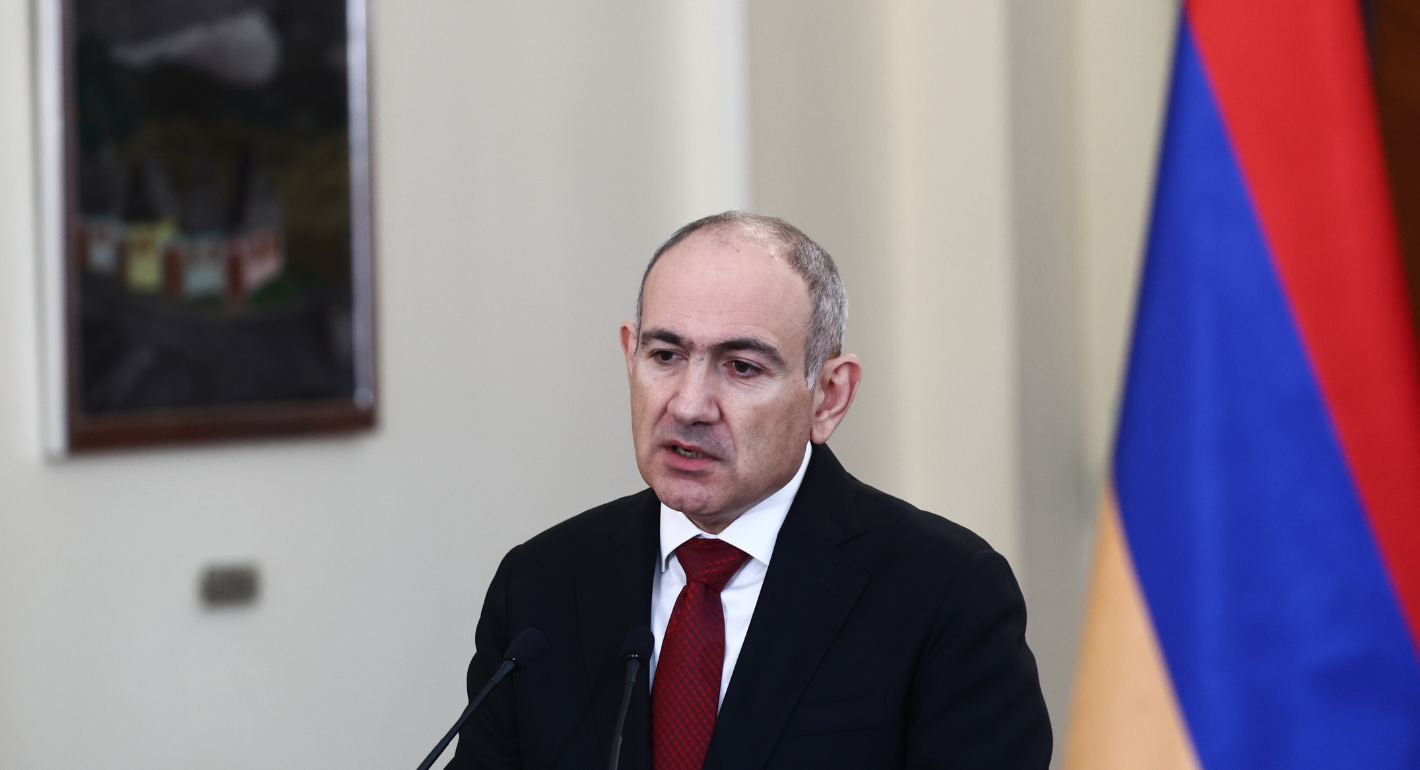
Europe has an interest in supporting Armenian leader Nikol Pashinyan as he tries to make peace with neighbors and loosen ties with Russia. But it is depersonalized support in the long term, not quickfire flash, that will win the day.
Armenia has never received so much attention. The smallest of the three South Caucasus republics is now the most dynamic and most democratic, emerging from years of semi-isolation. The reward is for Yerevan to host the eighth summit of the European Political Community (EPC) on May 4, 2026, followed immediately by the first ever bilateral EU-Armenia summit.
European leaders—most prominently French President Emmanuel Macron and European Commission President Ursula von der Leyen—are expected to show support for Armenia’s outreach to the EU and for the peace process with Azerbaijan. The visa liberalization process will likely be moved forward and new financial assistance will be announced.
The timing is, of course, no coincidence. As in Moldova in 2025, the EPC summit is designed to show support for a European-friendly government facing reelection and pressure from Russia: This time, it is Prime Minister Nikol Pashinyan and his Civil Contract party.
European leaders will have to walk a fine line in Yerevan, however. As they hold what looks like a pre-election rally for Pashinyan, they must also have a bigger conversation about building a more robust and less polarized Armenia.
The country itself deserves full European attention. It is on the verge of a painful but transformative peace agreement with Baku that will lead to the reopening of its two long borders with Azerbaijan and Turkey, which have been closed since the 1990s. The country also has a historic opportunity to loosen its overdependence on Moscow, as the war in Ukraine continues to distract and drain Russia.
Pashinyan, the man spearheading these changes, also deserves support—but in a qualified way. He is the only politician who sets out a real vision for Armenia’s future and actively seeks to throw off the burden of conflict with Azerbaijan and Turkey. The main opposition is currently comprised of three unsavory opposition parties, all of which are linked—in one way or another—to Russia.
The lack of an attractive alternative means Pashinyan’s Civil Contract is likely to win, more by default than because of mass voter enthusiasm. But he needs more than a simple win: He requires a two-thirds majority in parliament to be able to hold a referendum to adopt a new constitution, Azerbaijan’s last remaining prerequisite for signing a historic normalization agreement.
Yet, the history of this region tells us that relying on a single leader without building other democratic institutions is a risky proposition.
The story of Georgia in the 2000s is a cautionary tale. Its Western backers, especially in George W. Bush’s U.S. administration, treated the country as a pro-Western project and laboratory. They called it a “beacon of democracy” in a troubled region, and did not treat it as a real country with specific challenges.
Back then, over-personalized attention was paid to the former president, Mikheil Saakashvili. In the end, the spectacular success of the early Saakashvili years morphed into perpetual domestic and foreign crisis, intolerance of dissent, and war with Russia. That caused a backlash and ushered in the Georgian Dream government, which has turned away from Europe while telling voters to be wary of Western promises.
Like his Georgian forebear, Pashinyan could be both the short-term answer and the long-term problem for his country.
Pashinyan is an increasingly polarizing figure in Armenian society. He frames the pursuit of peace in black-and-white terms, repeatedly warning that if his party is not reelected there will be a “catastrophic war.” That does not encourage voters who are still traumatized after two military defeats by Azerbaijan in 2020 and 2023 and need more persuasion on the benefits of peace.
Pashinyan also displays a worrying lack of interest in building institutions that will consolidate democracy and provide constructive feedback to the government. As in other post-Soviet democracies, the judiciary is the weakest point, still unreformed and used as a political weapon by the authorities. In its 2025 report on Armenia, Freedom House said: “The courts face systemic political influence, and judicial institutions are undermined by corruption.”
The authorities have used this weapon to arrest podcasters for insulting the speaker of the parliament and put members of the main rival party, Strong Armenia, in pre-trial detention.
Over-personalized government—by the prime minister and his inner circle—also holds back the institution-building that is needed to drive Armenia forward, and limits the capacity to make use of the Global Gateway funds the EU is offering.
The European message on Armenia’s relationship with Russia also needs handling with care. Everyone knows that Moscow is a problem. It is barely a secret that the declining regional hegemon harbors dreams of limiting or getting rid of the powers of the Pashinyan government. A discordant conversation in front of television cameras between Pashinyan and President Vladimir Putin made Russia’s displeasure obvious.
Moscow is currently busy trying to contaminate the election, using Armenian social media to spread disinformation and inflammatory messages to voters—which is why Brussels is setting up a small EU Partnership Mission in Armenia to help the authorities deal with misinformation, cyberattacks, and illicit financial flows.
Yet most Armenians, including the current leaders, aspire to diversification—not divorce—from Russia. Fifty-six percent of Armenians, according to a February 2026 opinion poll, say they want a foreign policy that has them on good terms with both the West and Russia. Armenia’s economy is still highly dependent on Moscow, with hundreds of thousands of jobs linked to Russia, and Armenia will stay a member of the Eurasian Economic Union for the next few years at least.
For these reasons, Pashinyan’s government is loosening Russia’s economic and security grip on Armenia, slowly and step-by-step. Europeans should take note and be patient. In both domestic and foreign affairs, Armenia needs slow and steady support, not just a brief and bright show of preelection solidarity.
Subscribe to Strategic Europe, delivered to you weekdays!

Senior Fellow, Carnegie Europe
Thomas de Waal is a senior fellow at Carnegie Europe, specializing in Eastern Europe and the Caucasus.
Recent Work
Thomas de Waal, Areg Kochinyan, Zaur Shiriyev
Thomas de Waal
Following Ursula von der Leyen’s gaffe equating Turkey to Russia and China, relations with Ankara risk deteriorating even further. Without better, more consistent diplomatic messaging, how can the EU pretend to be a geopolitical power?

Sinan Ülgen
Closer EU-UK ties could help address urgent European concerns. But is the EU ready for rapprochement with the United Kingdom?

Rym Momtaz, ed.
Europe has been standing by while its Southern neighborhood is being redrawn by force. To establish a path to peace between Israel and Lebanon, it’s time for Europeans to get involved with hard power.
Rym Momtaz
In Ukraine, Gaza, and Iran, AI warfare has come to dominate, with barely any oversight or accountability. Europe must lead the charge on the responsible use of new military technologies.

Raluca Csernatoni
Montenegro and Albania are frontrunners for EU enlargement in the Western Balkans, but they can’t just sit back and wait. To meet their 2030 accession ambitions, they must make a strong positive case.


Dimitar Bechev, Iliriana Gjoni