

Commentary
As European leadership prepares for the sixteenth EU-India Summit, both sides must reckon with trade-offs in order to secure a mutually beneficial Free Trade Agreement.
Dinakar Peri
{
  "authors": [
    "Jürgen Großmann"
  ],
  "type": "commentary",
  "blog": "Strategic Europe",
  "centerAffiliationAll": "",
  "centers": [
    "Carnegie Endowment for International Peace",
    "Carnegie Europe",
    "Carnegie Russia Eurasia Center"
  ],
  "collections": [
    "EU Integration and Enlargement",
    "Brexit and UK Politics"
  ],
  "englishNewsletterAll": "",
  "nonEnglishNewsletterAll": "",
  "primaryCenter": "Carnegie Endowment for International Peace",
  "programAffiliation": "",
  "programs": [],
  "projects": [],
  "regions": [
    "Western Europe",
    "United Kingdom",
    "Europe",
    "France",
    "Germany"
  ],
  "topics": [
    "Political Reform",
    "EU",
    "Democracy"
  ]
}
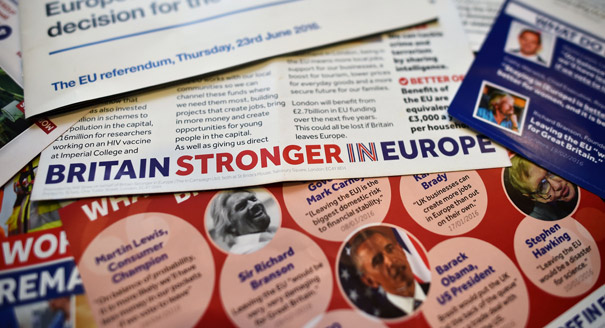
Whether or not the UK votes to leave the EU on June 23, the referendum will have serious consequences for the whole union.
It is the day after that needs thinking about. If, in the referendum on Britain’s EU membership on June 23, the country votes to leave, the EU risks chaos and further disintegration. But even if Britain votes to stay, it’s not all sweetness and light. If the EU takes a British vote to remain as a mandate confirming the status quo, it is in deep trouble.
Allow me to start with a few words about myself. As a German businessman and the founder of a nonprofit organization called United Europe, I passionately believe that Europe is needed to safeguard the continent’s peace, values, lifestyle, freedom, and prosperity. Whether Britain votes on June 23 for Brexit or for Bremain, the referendum will have serious consequences for the whole union, and the worst thing would be to incur them through thoughtlessness and inaction.
To have Britain leave the EU would be thoroughly undesirable. From everything I know about business, it seems clear to me that Britain would suffer most from being cut out of the EU’s single market and its trade agreements. But much has already been said on this issue, and I would like to concentrate on what the British referendum means for the rest of Europe. Brexit would have economic, financial, and, most importantly, political consequences.
Economically, Britain’s main trading partners—the Netherlands, Ireland, and Germany—would be hardest hit. Financially, it is probably Central and Eastern Europe that would suffer most. In 2015, Britain’s net contribution to the EU amounted to €11 billion ($12.3 billion). Any cuts to that contribution will affect most those countries that receive the highest net benefits.
Politically, there is bound to be chaos, at least in the short term. Whoever thinks that a British exit could be sorted out quickly and rationally is living in cloud-cuckoo-land. The Brexit camp has avoided committing itself to any particular alternative relationship between the UK and the EU. But it is unlikely that London would agree to a Norwegian-style package in which Britain would keep access to the single market but have to accept EU legislation and pay into the EU’s budget.
A more radical Brexit would mean disentangling thousands of laws and regulations. On the British side, the government has made no preparations to implement any of this. On the EU side, no quick solutions are likely, either. Several European governments would be certain to take a hard line in the Brexit negotiations, if only to deter other countries from leaving the EU.
To conclude on what Brexit would mean, just think of how much the rest of Europe would miss the British—their liberalism, their weight in international affairs, but also their pragmatism and their sense of humor. I am not at all enthusiastic about an EU dominated by Latin countries with their penchant for an ever-increasing role of the state.
So the Brits vote to remain, and everything is fine?
Of course, a huge sigh of relief will be breathed in government offices and boardrooms throughout Europe. And the temptation will be enormous to chalk the vote up as a success and revert to business as usual. There are plenty of crises looming to push the British issue off the agenda.
Yet to give in to this temptation would be catastrophic. June 23 is a moment of truth for the EU because it forces Europeans to admit how unpopular the union has become and how uncertain they are about where it should be headed. After all, even the pro-EU campaign in Britain isn’t very pro-European but motivated mostly by fear of the economic consequences of Brexit.
Hostility to the EU isn’t limited to Britain, either. Everywhere in Europe, Euroskeptic parties are gaining ground. This issue will force its way back onto the agenda because there will be more countries wanting to cut the same kind of deal that Prime Minister David Cameron achieved for Britain in February 2016. Such a Europe à la carte would certainly erode the continent’s community.
However the British referendum goes, the Europeans will have to address two issues. First, what integration path should Europe follow? A leap forward for core countries to strengthen their union? Other member states—including the Netherlands, one of the founding six, but now battered by its rejection in a referendum on April 6 of the EU-Ukraine Association Agreement—argue that the mood in Europe forbids any deepening of the union just now. This controversy has every potential to erode the EU’s cohesion even further.
Second, what can be done to win back the skeptics? It is fairly obvious that EU institutions need to become less bureaucratic and more respectful of national and local identities and their huge and enriching diversity. Any failure to do so creates huge ill will.
But more fundamentally, Europe needs to do more to create a better life for its citizens. There must be economic growth and create jobs, especially for the young. There is no secret about how to become more competitive. The reforms that will deliver growth are well-known: they include lowering and simplifying taxes and opening up the labor market. Yet they are difficult in the short term, which makes them an issue of political will, courage, and leadership.
Britain’s EU referendum, whichever way it goes, has many negative implications for the future of Europe. There is only a slim chance that Europe’s politicians will take the vote as the wake-up call that it is. But if Europe doesn’t address the growing malaise, we Europeans will all pay the price.
Jürgen Grossmann is the founder of the nonprofit organization United Europe.
Carnegie does not take institutional positions on public policy issues; the views represented herein are those of the author(s) and do not necessarily reflect the views of Carnegie, its staff, or its trustees.
As European leadership prepares for the sixteenth EU-India Summit, both sides must reckon with trade-offs in order to secure a mutually beneficial Free Trade Agreement.

Dinakar Peri
The hyper-personalized new version of global sphere-of-influence politics that Donald Trump wants will fail, as it did for Russia. In the meantime, Europe must still deal with a disruptive former ally determined to break the rules.

Thomas de Waal
2026 has started in crisis, as the actions of unpredictable leaders shape an increasingly volatile global environment. To shift from crisis response to strategic foresight, what under-the-radar issues should the EU prepare for in the coming year?
Thomas de Waal
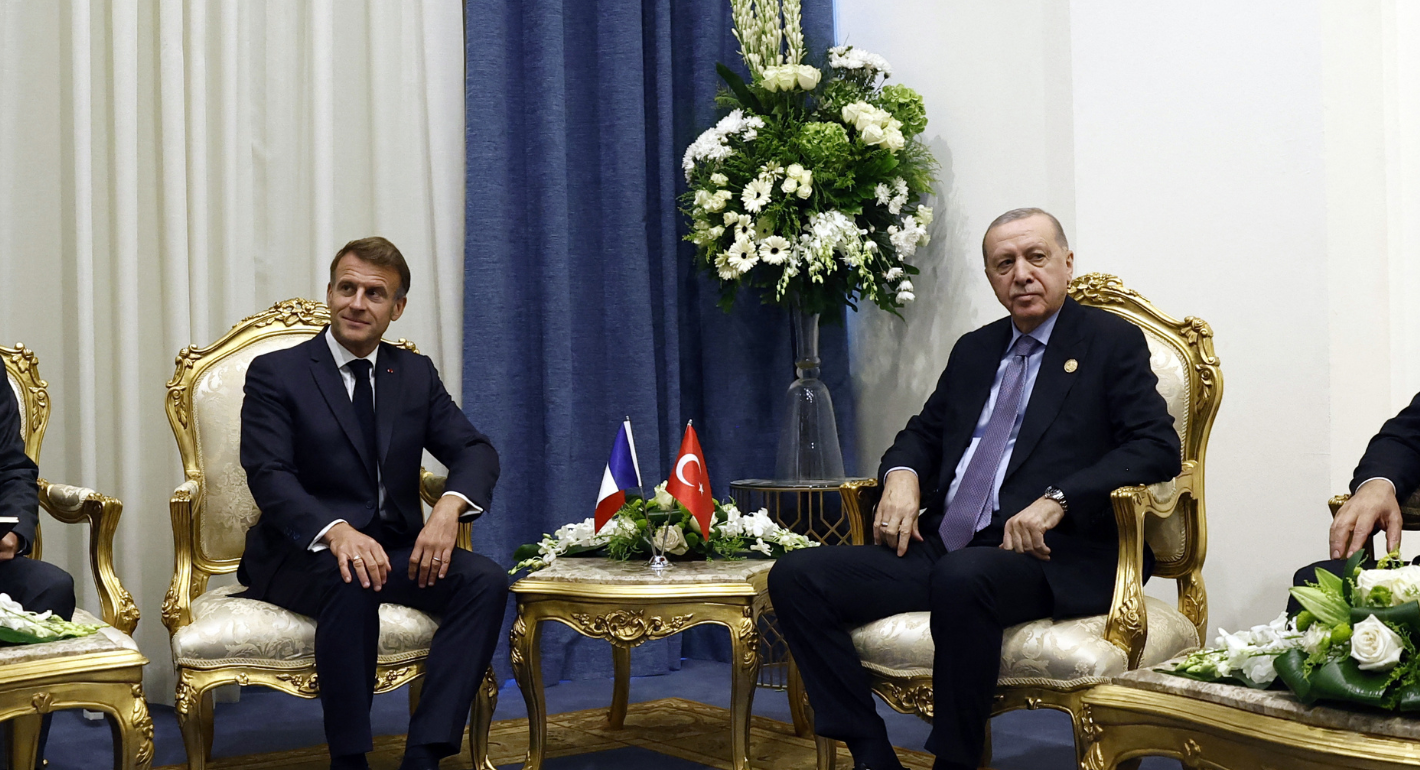
A renewal of relations between France and Turkey is vital to strengthen European strategic autonomy. To make this détente a reality, Paris and Ankara should move beyond personal friction and jointly engage with questions of Black Sea security.

Romain Le Quiniou
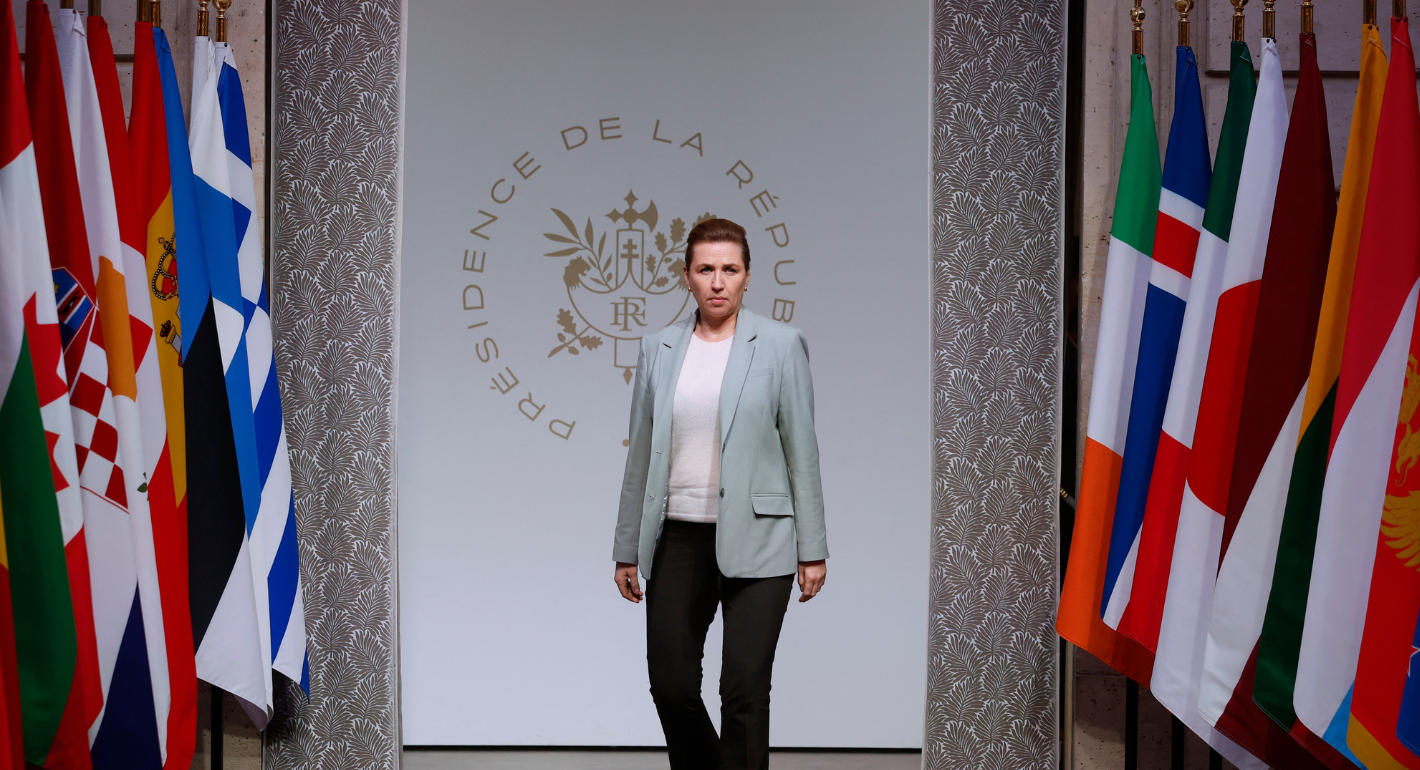
Europe is designing a new model of collective security that no longer relies on the United States. For this effort to succeed, solidarity between member states that have different threat perceptions is vital.

Erik Jones